
- Home page
- buying guide
- electrolyte analyzer
electrolyte analyzer
electrolyte analyzer: A technical guide

4 Criteria to choose your electrolyte analyzer
Measurement Precision Accuracy
High-fidelity sensors ensure clinical reliability for critical patient monitoring while minimizing diagnostic errors in acute care settings and laboratories.
Maintenance Calibration Frequency
Low-intervention systems reduce labor costs and downtime, maximizing operational availability for high-volume clinical facilities and urgent testing needs.
Throughput Response Time
Rapid processing speeds optimize workflow efficiency and decrease turnaround times for emergency departments requiring immediate patient physiological data.
Sample Volume Requirements
Microsampling capabilities facilitate testing for pediatric and geriatric patients where obtaining large blood volumes is clinically challenging or risky.
Available technologies and advantages
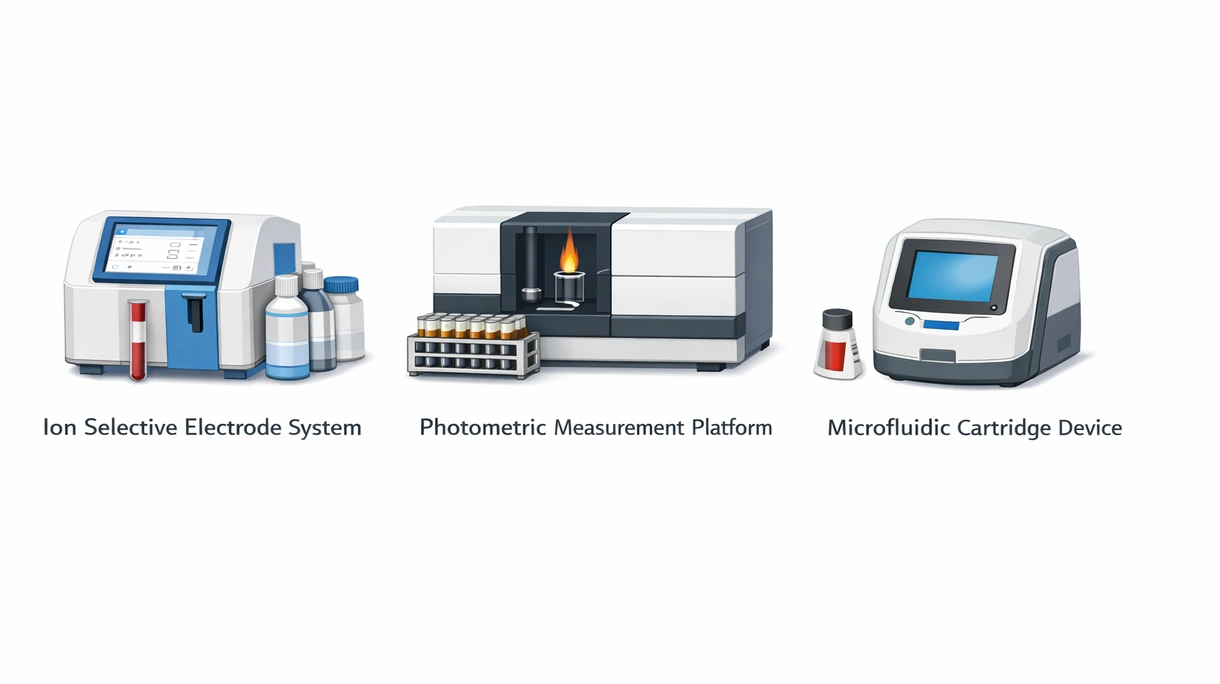
Ion Selective Electrode Systems
This technology utilizes potentiometric sensors to measure specific ions directly in undiluted whole blood or serum for immediate and highly accurate results.
Operational Performance Evaluation
High throughput and precision benefit busy laboratories, though frequent electrode maintenance and calibration reagent costs represent significant operational trade-offs.
Photometric Measurement Platforms
These devices employ colorimetric or flame photometry techniques to quantify electrolyte concentrations through light absorption or emission intensity variations across various samples.
Operational Performance Evaluation
Lower consumable costs improve budget efficiency, yet complex maintenance and slower result delivery are notable limitations for acute patient care units.
Microfluidic Cartridge Devices
Portable point-of-care units use disposable microfluidic cartridges to perform bedside electrolyte testing with minimal blood volume and very low maintenance requirements.
Operational Performance Evaluation
Immediate results facilitate rapid clinical decisions at the bedside, while higher per-test costs and limited throughput are the primary strategic constraints.
6 expert tips
Prioritize analyzers with integrated quality control modules to ensure continuous compliance with CLIA and IVDR regulatory laboratory standards.
Assess the total cost of ownership by calculating reagent consumption rates alongside initial capital expenditure for long-term financial viability.
Always verify the technical certification to ensure compliance with local building safety standards and long-term durability.
Evaluate software compatibility with existing hospital information systems to streamline electronic health record integration and automate patient data transfer.
Select modular systems that allow for future sensor upgrades to accommodate expanding clinical diagnostic menus and evolving patient needs.
Choose devices featuring automated cleaning cycles to maintain hygiene standards and extend the operational lifespan of sensitive electrode components.
Innovations and Trends
AI-driven predictive maintenance utilizes machine learning to forecast sensor failures, reducing unscheduled clinical downtime and improving laboratory throughput efficiency.
Integrated blood gas modules enable simultaneous electrolyte and respiratory monitoring, enhancing diagnostic speed for critically ill emergency department patients.
Cloud-based remote monitoring platforms allow technicians to manage multiple analyzers simultaneously, ensuring consistent quality control across decentralized healthcare networks.
Solid-state sensor technologies eliminate liquid reagents in some models, significantly reducing biohazardous waste and simplifying environmental compliance protocols.
*Prices are pre-tax. They exclude delivery charges and customs duties and do not include additional charges for installation or activation options. Prices are indicative only and may vary by country, with changes to the cost of raw materials and exchange rates.
About MedicalExpo
MedicalExpo is a marketplace that offers B2B players a complete experience, from product sourcing to purchase. MedicalExpo is an entity of VirtualExpo Group.
Are you a buyer?
Are you a supplier?