
- Home page
- buying guide
- ultrasound transducer
ultrasound transducer
ultrasound transducer: A technical guide
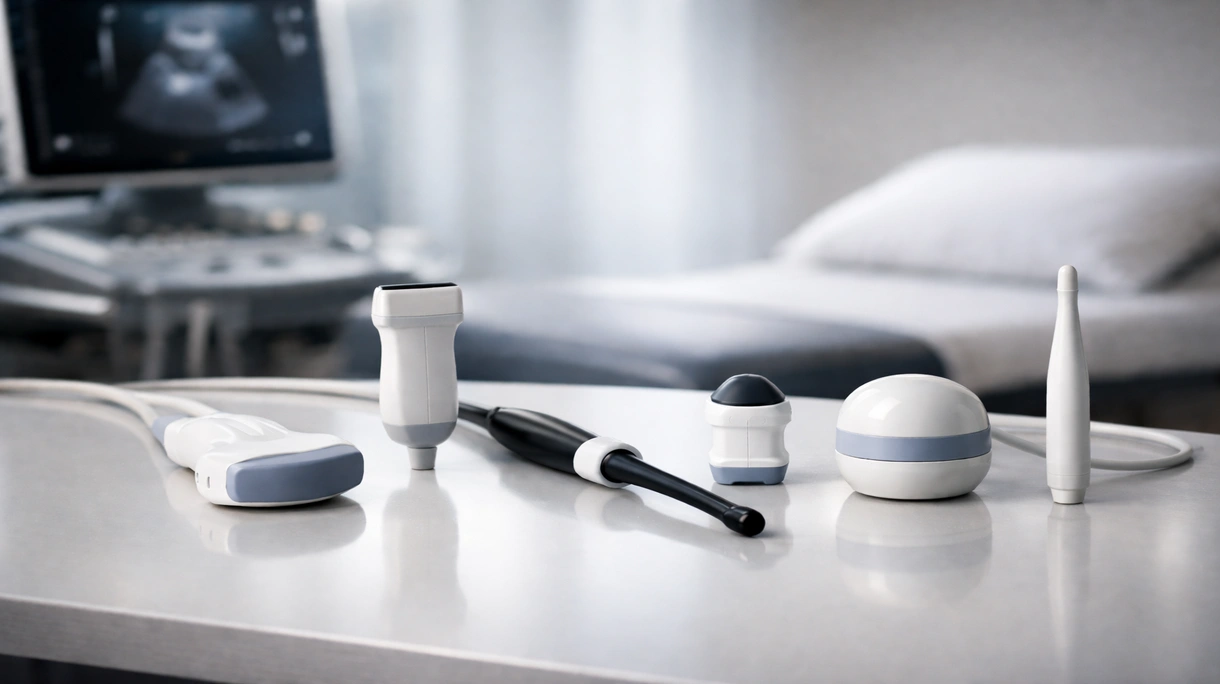
4 Criteria to choose your ultrasound transducer
Piezoelectric Element Density
High density arrays ensure superior spatial resolution and contrast, which are vital for detecting subtle anatomical pathologies in diagnostic imaging.
Multi Frequency Bandwidth Versatility
Wide frequency ranges allow clinicians to toggle between deep tissue penetration and superficial detail without switching physical transducers frequently.
Ergonomic Scanhead Design
Lightweight, balanced probes minimize repetitive strain injuries for sonographers during high volume shifts while maintaining consistent acoustic coupling and control.
Total Cost Ownership
Evaluation includes repairability, lifecycle durability, and compatibility with existing imaging consoles to optimize long term clinical budget allocations.
Available technologies and advantages
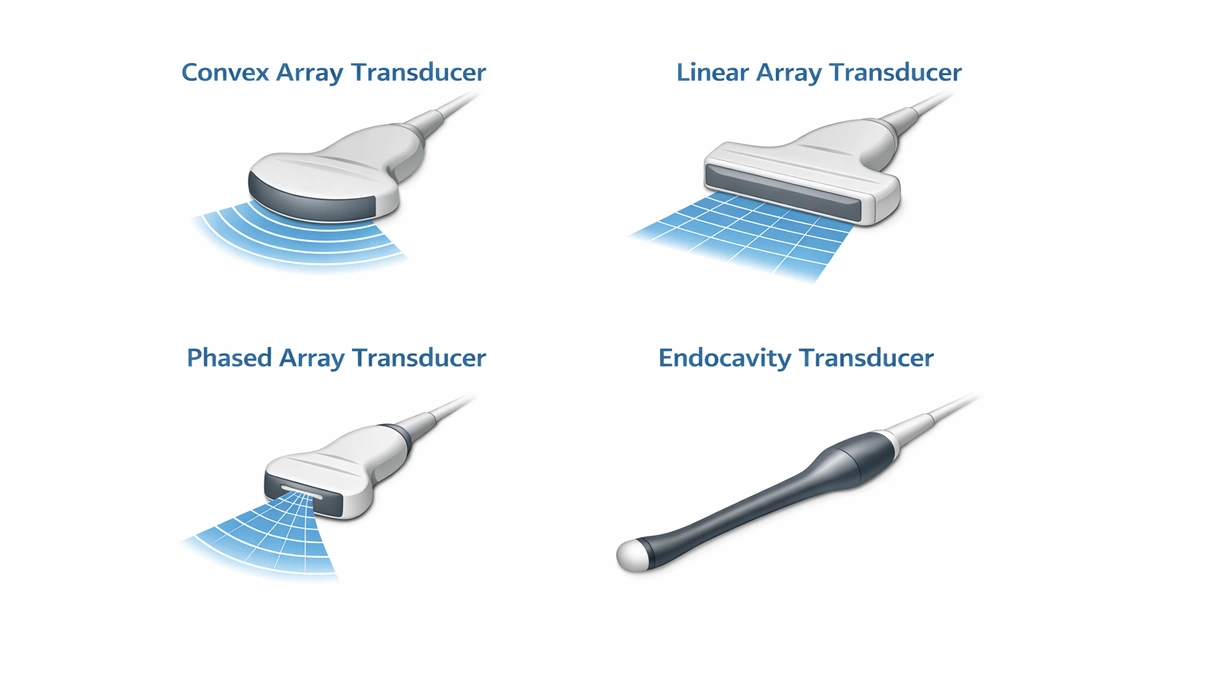
Convex Array Transducers
These low frequency curved probes utilize divergent beams to provide a wide field of view specifically for abdominal and obstetric imaging.
Convex Operational Profile
Advantages include deep penetration and wide visualization, though lateral resolution decreases at depth, requiring comprehensive mapping compromises during exams.
Linear Array Transducers
High frequency crystals arranged in a straight line produce rectangular images for vascular, small parts, and musculoskeletal diagnostic procedures.
Linear Operational Profile
Superior superficial resolution provides excellent vascular detail, yet poor depth penetration limits use to near field clinical applications exclusively today.
Phased Array Transducers
These small footprint probes use electronic beam steering to navigate tight acoustic windows like intercostal spaces during cardiac echocardiography.
Phased Operational Profile
Small apertures facilitate cardiac access through ribs, although this design necessitates a narrower near field visualization area for clinicians.
Endocavity Transducers
Specialized designs featuring long shafts and tight radii for high resolution internal imaging of the pelvic and reproductive organs.
Endocavity Operational Profile
Proximity to internal organs ensures exceptional image clarity, which demands rigorous high level disinfection and protective sheath management protocols.
6 expert tips
Prioritize transducers featuring high element counts to ensure diagnostic accuracy and reduce the necessity for repeated clinical examinations.
Select probes with reinforced strain reliefs to prevent cable failure and minimize expensive downtime in high traffic emergency units.
Validate the availability of local repair services and loaner programs to safeguard continuous clinical operations and patient throughput.
Invest in matrix array technology for complex cases requiring real time three dimensional visualization and advanced diagnostic quantification capabilities.
Confirm that all chosen transducers meet strict high level disinfection standards and are compatible with automated reprocessors.
Assess the backwards compatibility of new probes with existing fleet consoles to avoid unnecessary hardware replacement expenditures.
Always verify the technical certification to ensure compliance with local building safety standards and long-term durability.
Innovations and Trends
Integration of high purity materials provides wider bandwidth and deeper penetration, significantly improving image clarity for difficult patients.
Moving from piezoelectric crystals to semiconductor based transducers enables affordable, high performance handheld devices with massive scalability in point of care.
Secure medical grade wireless protocols remove physical cables, enhancing sterility in surgical environments and improving operator range of motion.
Embedded artificial intelligence algorithms automatically adjust beamforming parameters in real time to ensure optimal image quality across diverse populations.
*Prices are pre-tax. They exclude delivery charges and customs duties and do not include additional charges for installation or activation options. Prices are indicative only and may vary by country, with changes to the cost of raw materials and exchange rates.
About MedicalExpo
MedicalExpo is a marketplace that offers B2B players a complete experience, from product sourcing to purchase. MedicalExpo is an entity of VirtualExpo Group.
Are you a buyer?
Are you a supplier?