
- Home page
- buying guide
- body massager
body massager
body massager: A technical guide
4 Criteria to choose your body massager
Medical Grade Certification
FDA and MDR compliance ensures patient safety and therapeutic efficacy in clinical environments, meeting strict healthcare regulatory standards globally.
Percussive Amplitude Depth
High amplitude strokes provide deep tissue mobilization required for rehabilitation, surpassing superficial vibration tools used in non-medical wellness facilities.
Hospital Grade Disinfection
Materials must withstand rigorous chemical sterilization protocols to prevent cross-contamination between patients in busy secondary care clinical environments.
Ergonomic Motor Torque
Consistent torque ensures therapy does not stall under pressure, allowing clinicians to maintain precise force during intensive treatments.
Available technologies and advantages
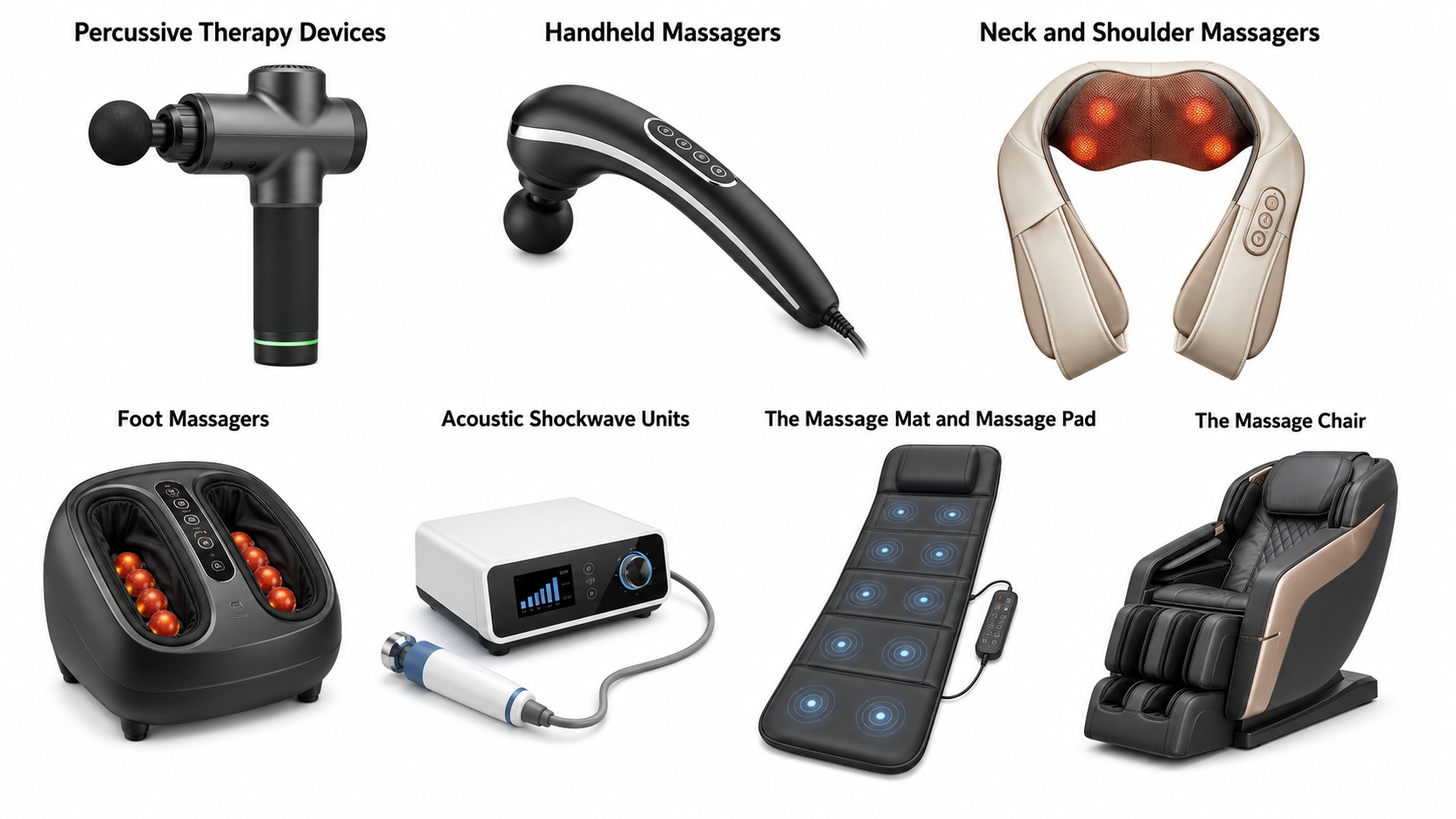
Percussive Therapy Devices
High-velocity mechanical pulses deliver targeted pressure to neuromuscular junctions, facilitating rapid myofascial release and localized blood flow improvements.
Operational Performance Dynamics
Advantages include deep tissue penetration; limitations involve significant patient discomfort and high acoustic noise levels; trade-offs focus on peak power versus portable ergonomics.
Pneumatic Compression Systems
Cyclical inflation and deflation of specialized sleeves provide sequential pressure to limbs, effectively managing chronic lymphedema and serious venous insufficiency.
Circulatory Support Requirements
Advantages include total limb coverage; limitations are restricted patient mobility and high initial procurement costs; trade-offs involve treatment duration versus clinical patient throughput.
Acoustic Shockwave Units
Focused or radial pressure waves penetrate deep tissues to trigger biological healing responses in chronic musculoskeletal conditions and various pathologies.
Tissue Regeneration Variables
Advantages involve long-term biological tissue repair; limitations include high practitioner skill requirements; trade-offs balance capital investment against specialized clinical billing codes.
6 expert tips
Prioritize devices holding FDA Class Two or CE MDR certification to ensure legal compliance and clinical safety standards.
Select models with brushless motors to maximize operational lifespan and minimize noise disruptions within shared clinical treatment rooms.
Verify that the chassis material is non-porous and validated for compatibility with quaternary ammonium disinfection wipes for hygiene.
Evaluate the battery interchangeability and charging speed to maintain continuous workflow during high-volume patient rehabilitation and recovery sessions.
Invest in units offering variable speed settings to customize treatment intensity based on specific patient sensitivity and pathology.
Ensure the manufacturer provides comprehensive technical support and documented evidence of clinical efficacy for professional medical liability protection.
Always verify the technical certification to ensure compliance with local building safety standards and long-term durability.
Innovations and Trends
. AI-integrated pressure sensors provide real-time feedback to therapists, ensuring standardized treatment protocols and preventing excessive soft tissue damage.
. Emerging wireless connectivity allows for direct synchronization with electronic health records, automating the documentation of patient rehabilitation progress.
. Miniaturized high-torque motors enable handheld devices to match stationary unit performance, facilitating bedside therapy in acute care settings.
. New ergonomic handle designs reduce vibration transfer to the clinician, mitigating occupational risks associated with repetitive strain injuries.
*Prices are pre-tax. They exclude delivery charges and customs duties and do not include additional charges for installation or activation options. Prices are indicative only and may vary by country, with changes to the cost of raw materials and exchange rates.
About MedicalExpo
MedicalExpo is a marketplace that offers B2B players a complete experience, from product sourcing to purchase. MedicalExpo is an entity of VirtualExpo Group.
Are you a buyer?
Are you a supplier?