
- Home page
- buying guide
- forehead thermometer
forehead thermometer
forehead thermometer: A technical guide
4 Criteria to choose your forehead thermometer
Clinical measurement accuracy
Must be ISO compliant to ensure diagnostic reliability in high-stakes medical environments like emergency departments and intensive care units.
Latency and throughput
Rapid response times under a single second are essential for high-volume screening in busy triage zones and clinical entries.
Cross-contamination prevention
Non-contact infrared sensors combined with antimicrobial casing materials minimize infection risks and satisfy hospital hygiene protocols for patient safety.
Data integration capabilities
Connectivity features allow automatic temperature logging into Electronic Health Records, reducing manual charting errors and improving clinical documentation efficiency.
Available technologies and advantages
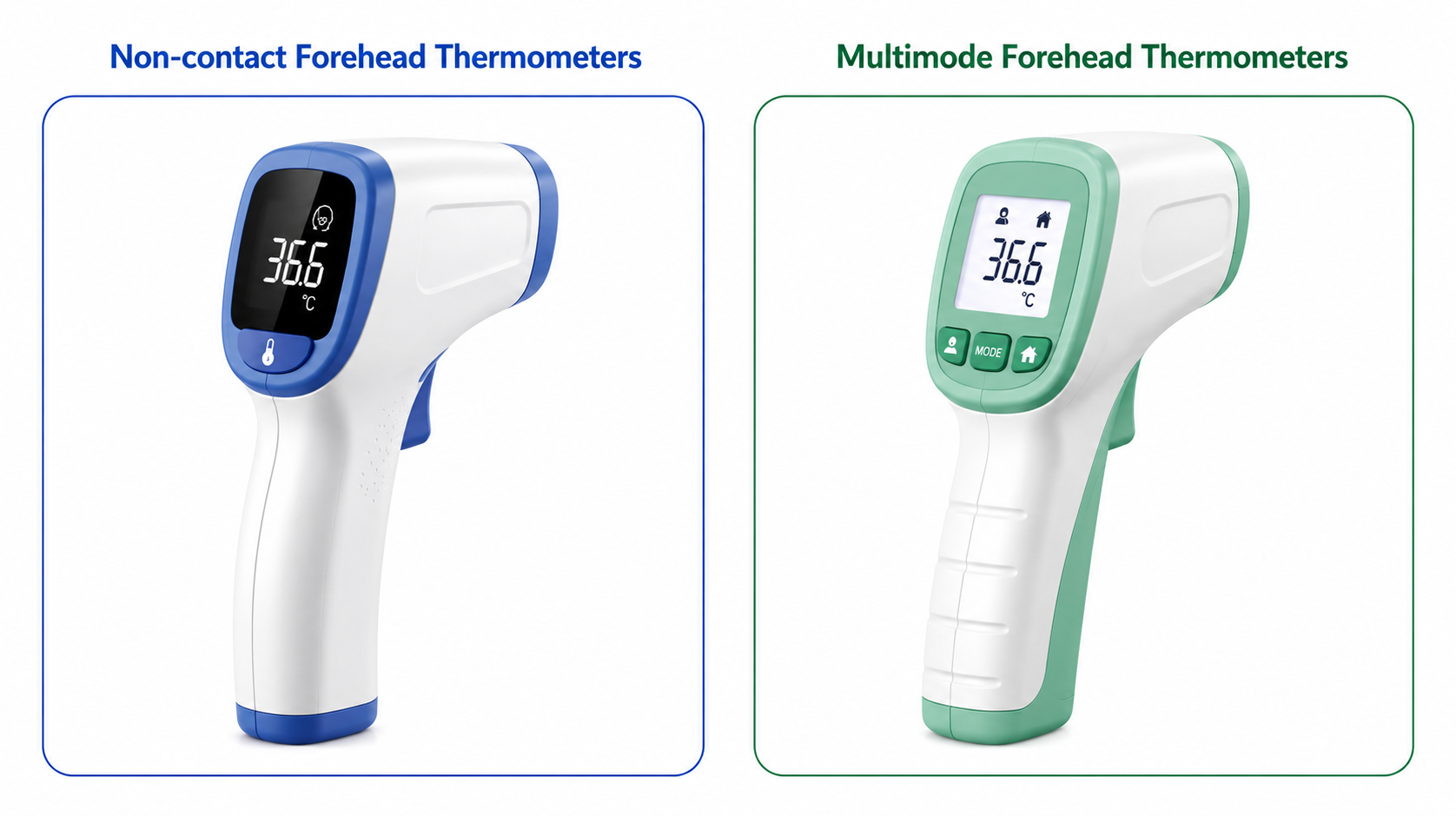
Infrared Temporal Thermometers
These sensors detect heat from the temporal artery, offering high precision for clinical diagnostics compared to standard surface-reading sensors. They balance speed with accuracy while maintaining hygiene protocols. Clinicians benefit from high diagnostic reliability and non-invasive application, although limitations include sensitivity to skin moisture, requiring a trade-off between throughput and environmental control.
Multimode Infrared Sensors
These versatile devices switch between forehead and surface modes, providing flexibility for diverse clinical settings and patient demographics. They require strict cleaning to prevent cross-contamination and ensure lens clarity. While offering broad utility across departments, they risk user error during mode selection, necessitating clear protocols to ensure diagnostic accuracy remains the priority.
6 expert tips
Verify technical certification to ensure compliance with local building safety standards and long-term durability for clinical use.
Prioritize models with integrated wireless connectivity to streamline automated patient data entry into existing electronic health record systems.
Select units featuring high-grade antimicrobial housing to maintain strict infection control standards within high-traffic clinical triage areas.
Evaluate total cost of ownership by considering battery longevity and the frequency of required professional calibration services.
Purchase units with high-speed processing chips to facilitate rapid patient throughput during peak hours in emergency medical departments.
Ensure that chosen thermometers include clear visual and audible alerts for fever detection to assist busy clinical staff.
Innovations and Trends
Integrated proximity sensors prevent measurement triggering until the device reaches the exact distance required for optimal clinical accuracy.
Real-time data transmission directly to electronic records eliminates manual input errors while significantly improving administrative workflow efficiency.
Advanced arrays analyze multiple infrared wavelengths to compensate for ambient temperature fluctuations and varying skin emissivity levels.
New rechargeable capacitor designs offer rapid charging and eliminate the logistical burden of disposing of hazardous batteries.
*Prices are pre-tax. They exclude delivery charges and customs duties and do not include additional charges for installation or activation options. Prices are indicative only and may vary by country, with changes to the cost of raw materials and exchange rates.
About MedicalExpo
MedicalExpo is a marketplace that offers B2B players a complete experience, from product sourcing to purchase. MedicalExpo is an entity of VirtualExpo Group.
Are you a buyer?
Are you a supplier?