
- Home page
- buying guide
- exerciser
exerciser
exerciser: A technical guide
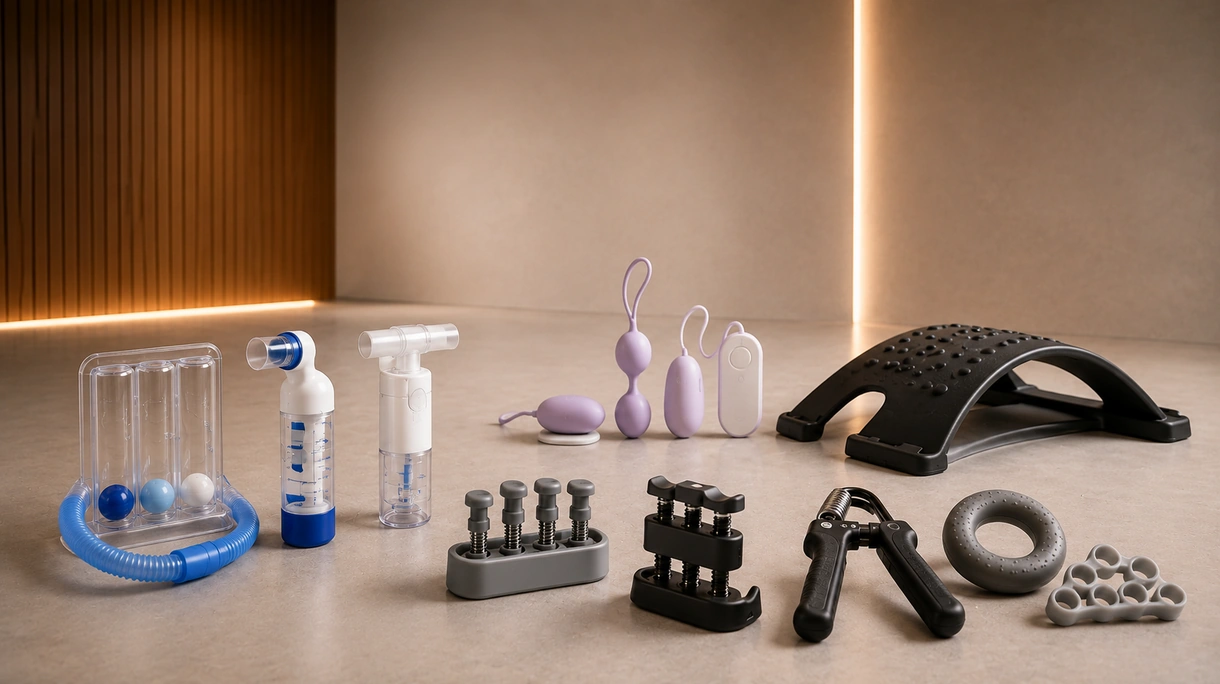
4 Criteria to choose your exerciser
Biomechanical movement accuracy
Must ensure anatomical alignment to prevent secondary injuries during repetitive therapeutic motions while optimizing muscle recruitment patterns.
Dynamic resistance adjustment
Requires precise control over concentric and eccentric loads to accommodate patient progress and specific clinical rehabilitation protocols safely.
Integrated biofeedback systems
Provides real-time performance data to clinicians and patients, ensuring movement quality and objective tracking of recovery benchmarks.
Medical grade durability
Complies with strict hygiene protocols and mechanical safety standards for high-frequency use in professional clinical environments.
Available technologies and advantages
Isokinetic Dynamometry Systems
These high-end systems provide constant velocity resistance, allowing for maximum force production safely. Compared to pneumatic units, they offer superior diagnostics but require significantly more clinical space.
Pneumatic Resistance Technology
Compressed air systems eliminate momentum-based risks, providing smooth tension that is gentler on joints than electromagnetic modules. They offer high safety but necessitate integrated air compressors.
Electromagnetic Load Modules
Digital braking systems allow for micro-adjustments in resistance and better EHR integration than traditional isokinetic systems. These units are compact and versatile but depend entirely on software stability.
6 expert tips
Prioritize equipment that features seamless integration with existing hospital information systems to automate patient data logging and outcomes.
Select units with antimicrobial surfaces and easy-to-clean components to satisfy rigorous hospital-acquired infection prevention and control standards.
Evaluate the total cost of ownership by including multi-year service contracts and availability of certified replacement mechanical parts.
Choose modular designs that allow for future technology upgrades or additional peripheral attachments to extend the equipment lifecycle.
Verify the technical certification to ensure compliance with local building safety standards and long-term durability.
Invest in devices offering variable height adjustments and ergonomic accessibility to accommodate patients with diverse mobility limitations.
Innovations and Trends
Provides immersive environments that significantly increase patient engagement and adherence to repetitive physical therapy protocols.
Utilize historical performance data to automatically adjust resistance levels based on real-time fatigue detection and recovery.
Allows clinicians to monitor patient progress remotely through synchronized cloud-based platforms and professional mobile apps.
Tracks precise limb orientation and joint angles to provide detailed spatial analysis during every therapeutic session.
*Prices are pre-tax. They exclude delivery charges and customs duties and do not include additional charges for installation or activation options. Prices are indicative only and may vary by country, with changes to the cost of raw materials and exchange rates.
About MedicalExpo
MedicalExpo is a marketplace that offers B2B players a complete experience, from product sourcing to purchase. MedicalExpo is an entity of VirtualExpo Group.
Are you a buyer?
Are you a supplier?