
- Home page
- buying guide
- examination table
examination table
examination table: A technical guide
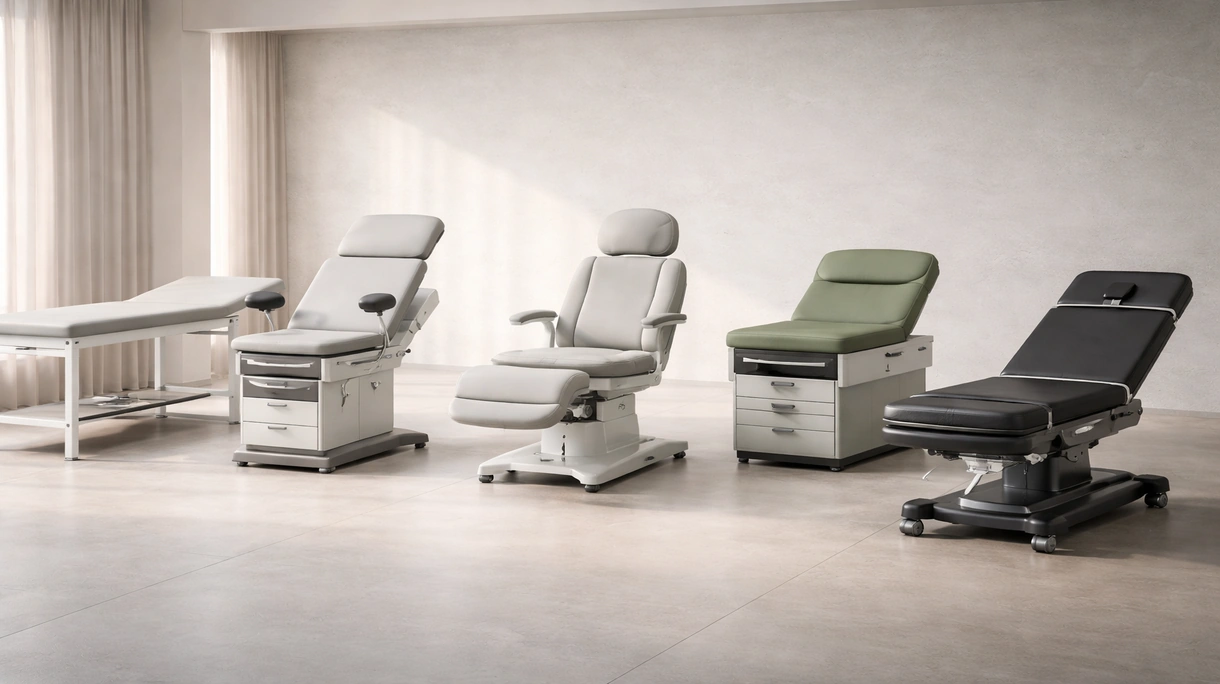
4 Criteria to choose your examination table
Load capacity and stability
Supports bariatric patients safely while preventing mechanical failure or tipping during high-pressure physical examinations or patient transfers.
Ergonomic height adjustment range
Minimizes practitioner musculoskeletal strain and facilitates safe patient ingress through electronic or hydraulic vertical movement between specific heights.
Upholstery decontamination compatibility
Material must withstand medical-grade chemical disinfectants without degradation to ensure strict adherence to infection control protocols and durability.
Integrated medical device modularity
Allows seamless attachment of stirrups, IV poles, and monitoring arms to optimize clinical workflow in diverse specialist environments.
Available technologies and advantages
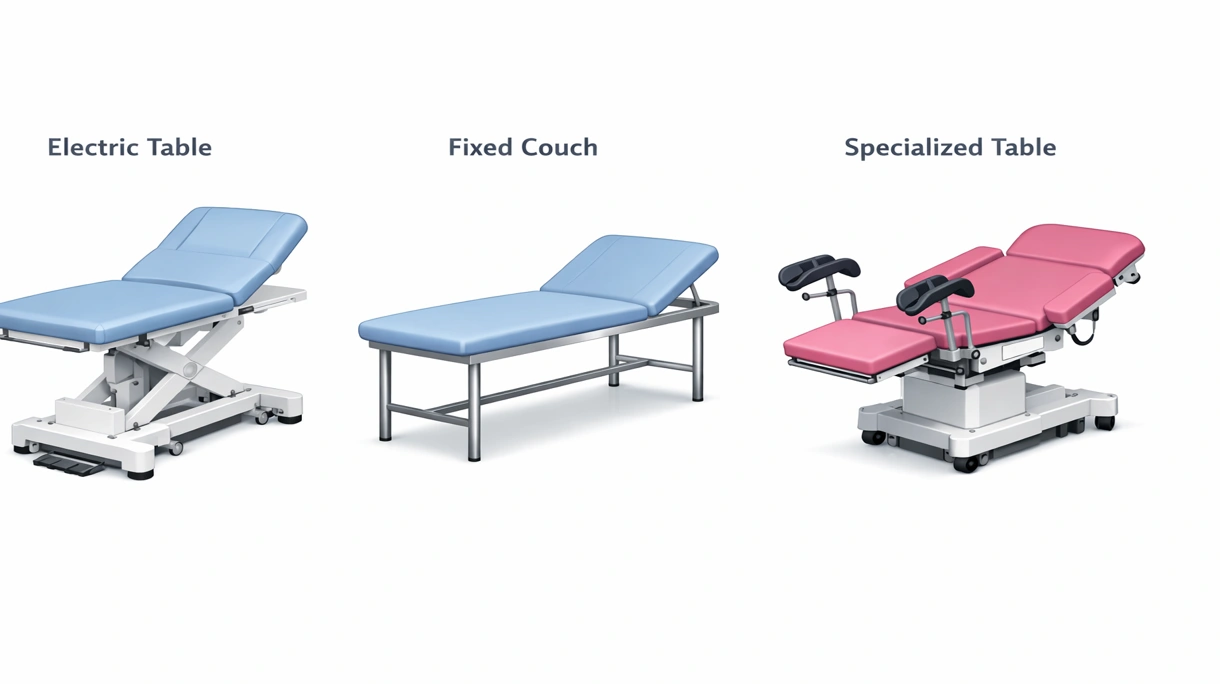
Electric table technology
Electric height-adjustable tables utilize linear actuators to provide smooth vertical travel often between forty-five and ninety centimeters, supporting high weight capacities and ensuring precision.
Operational impact
These offer superior ergonomics and patient accessibility but require constant power access and involve higher initial procurement and long-term maintenance costs.
Fixed couch technology
Fixed-height examination couches are constructed from stainless steel or epoxy-coated frames with manual headrest adjustment, providing a stable, non-mechanical surface for routine medical consultations.
Operational impact
They provide exceptional durability and lower capital expenditure yet lack accessibility for mobility-impaired patients and significantly increase practitioner back strain.
Specialized table technology
Specialized procedure tables are engineered with multi-sectional articulation and specific cut-outs, facilitating specialized positioning for gynecological, cardiovascular, or minor surgical diagnostic interventions.
Operational impact
Specialized tables optimize clinical outcomes for specific pathologies but offer less versatility for general practice and require significantly larger clinical footprints.
6 expert tips
Prioritize tables with low minimum heights to ensure compliance with ADA accessibility guidelines and reduce patient fall risks.
Select seamless upholstery designs to eliminate pathogen reservoirs and significantly decrease time required for terminal room cleaning protocols.
Invest in dual-motor systems to enable independent backrest adjustment and height movement, maximizing practitioner efficiency during complex examinations.
Evaluate the total cost of ownership by including annual preventive maintenance and replacement parts for mechanical lift components.
Standardize pedal controls across departments to reduce user training time and minimize operational errors during emergency clinical procedures.
Choose high-density fire-retardant foam to meet international safety standards while maintaining patient comfort during prolonged diagnostic sessions.
Always verify the technical certification to ensure compliance with local building safety standards and long-term durability.
Innovations and Trends
Integrating biocidal properties directly into upholstery surfaces provides continuous protection against multidrug-resistant organisms between manual cleaning cycles.
Embedded load cells automate patient weighing during initial assessment, improving dosing accuracy and streamlining digital health record entry.
Transitioning to PVC-free and phthalate-free textiles aligns with hospital sustainability goals while meeting stringent medical-grade biocompatibility requirements.
Removing physical cables reduces trip hazards in the exam room and allows practitioners greater freedom of movement.
*Prices are pre-tax. They exclude delivery charges and customs duties and do not include additional charges for installation or activation options. Prices are indicative only and may vary by country, with changes to the cost of raw materials and exchange rates.
About MedicalExpo
MedicalExpo is a marketplace that offers B2B players a complete experience, from product sourcing to purchase. MedicalExpo is an entity of VirtualExpo Group.
Are you a buyer?
Are you a supplier?