
- Home page
- buying guide
- urine analyzer
urine analyzer
urine analyzer: A technical guide
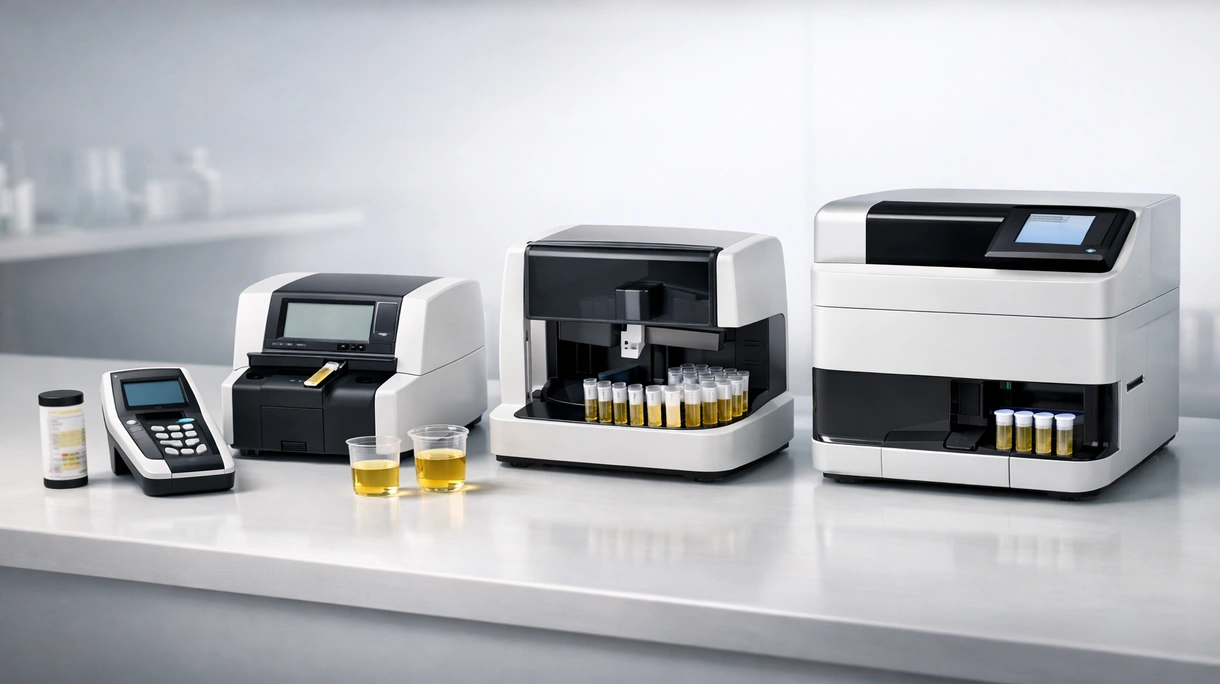
4 Criteria to choose your urine analyzer
Analytical Throughput Capacity
High-volume facilities require rapid processing to ensure timely clinical decisions while maintaining sample integrity across extensive daily diagnostic workloads.
Chemical Sediment Integration
Consolidating dry chemistry and digital flow photometry minimizes manual microscopy, reducing turnaround times and human error in cellular identification.
Bidirectional LIS Connectivity
Seamless integration with laboratory information systems ensures accurate patient data transfer, eliminating manual entry risks and improving billing accuracy.
Reagent Stability Period
Extended onboard reagent shelf life reduces chemical waste and lowers the cost per test during periods of fluctuating demand.
Available technologies and advantages
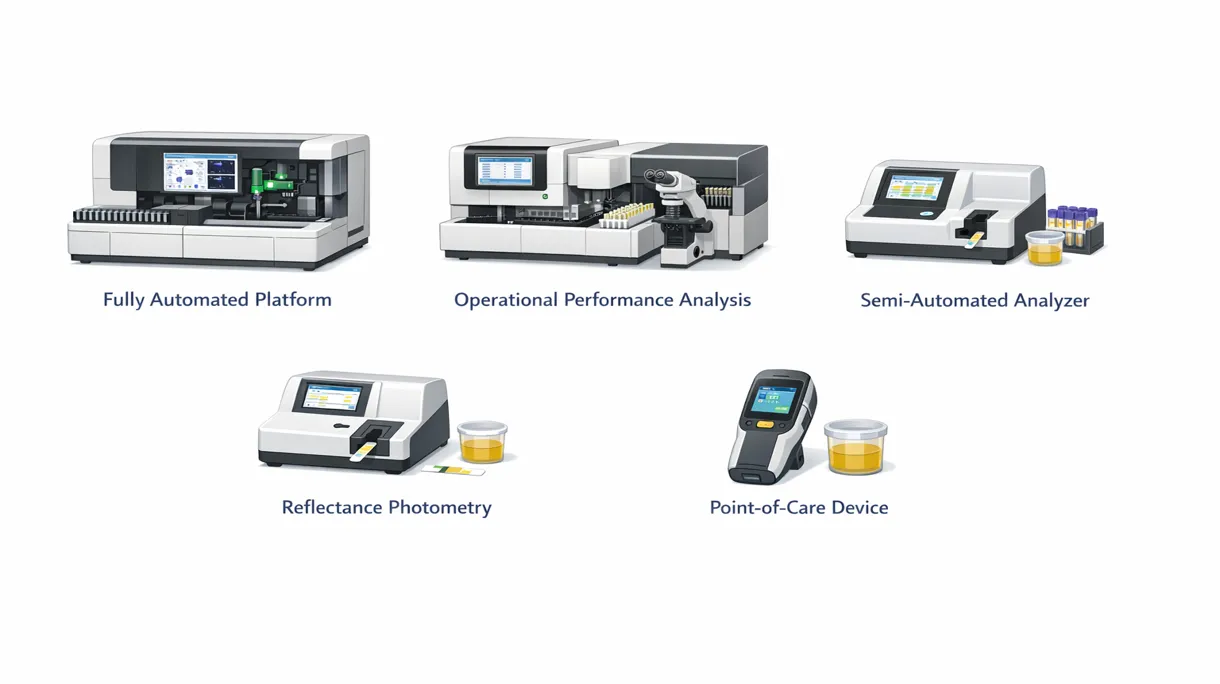
Fully Automated Platforms
Fully Automated Platforms integrate flow cytometry and digital imaging to identify sediments, providing high-precision data for large-scale clinical diagnostics and laboratories.
Operational Performance Analysis
These units maximize analytical efficiency and accuracy but require substantial capital investment and rigorous maintenance schedules for delicate optical components.
Semi-Automated Analyzers
Semi-Automated Analyzers utilize reflectance photometry for chemical strip reading, offering a balanced solution for medium-sized clinics requiring consistent and standardized results.
Reflectance Photometry Impact
These systems are cost-effective and reliable yet rely on manual sample preparation which increases the inherent risk of pre-analytical errors.
Point-of-Care Devices
Point-of-Care Devices utilize miniaturized biosensors for rapid bedside screening, delivering immediate results for emergency departments and small primary care medical practices.
Bedside Diagnostic Trade-offs
Portability enhances patient flow despite having higher cost-per-test ratios and limited diagnostic depth compared to laboratory-grade automated diagnostic equipment.
6 expert tips
Prioritize analyzers with FDA and CE certifications to ensure global regulatory compliance and high clinical safety standards for patients.
Evaluate the total cost of ownership including reagents and maintenance contracts rather than focusing only on the initial investment.
Select systems featuring advanced digital imaging to minimize labor-intensive manual microscopy and improve laboratory technician productivity across busy shifts.
Ensure the hardware supports bidirectional communication protocols for seamless data synchronization with existing healthcare electronic medical record management systems.
Opt for modular designs that allow for future throughput scaling to accommodate growing patient volumes without requiring complete replacement.
Always verify the technical certification to ensure compliance with local building safety standards and long-term durability.
Innovations and Trends
Utilizes deep learning algorithms to automate cellular recognition, significantly improving diagnostic accuracy and reducing manual review rates.
Enables precise analysis with minimal sample volumes, facilitating pediatric testing and reducing waste in clinical laboratory settings.
Allow for real-time performance monitoring and predictive maintenance, ensuring continuous uptime for critical healthcare diagnostic infrastructure.
Permit simultaneous detection of multiple biomarkers, expanding clinical insights from an individual specimen for complex pathologies.
*Prices are pre-tax. They exclude delivery charges and customs duties and do not include additional charges for installation or activation options. Prices are indicative only and may vary by country, with changes to the cost of raw materials and exchange rates.
About MedicalExpo
MedicalExpo is a marketplace that offers B2B players a complete experience, from product sourcing to purchase. MedicalExpo is an entity of VirtualExpo Group.
Are you a buyer?
Are you a supplier?