
- Home page
- buying guide
- patient weighing scale
patient weighing scale
patient weighing scale: A technical guide
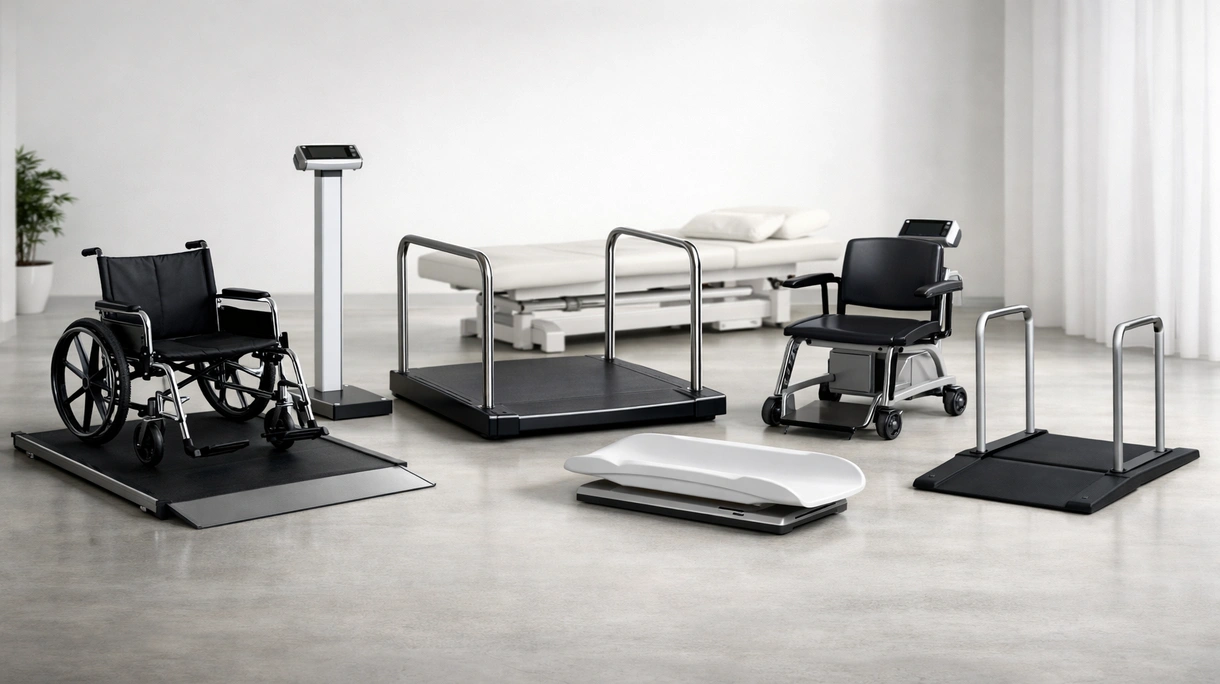
4 Criteria to choose your patient weighing scale
Metrological Accuracy Standards
Devices must adhere to OIML Class Three or NTEP standards to ensure precise clinical measurement and legal for trade compliance requirements.
Patient Mobility Integration
Equipment must accommodate diverse physical states through integrated handrails, wheelchair ramps, or lift-compatible designs to ensure universal clinical accessibility and safety.
Seamless Connectivity Protocols
Wireless or wired data transmission protocols enable immediate weight logging into electronic records, reducing transcription errors and improving medical workflow efficiency.
Infection Control Compatibility
Non-porous surfaces and antimicrobial coatings must withstand hospital-grade disinfectants to prevent cross-contamination within high-traffic acute care or surgical environments.
Available technologies and advantages
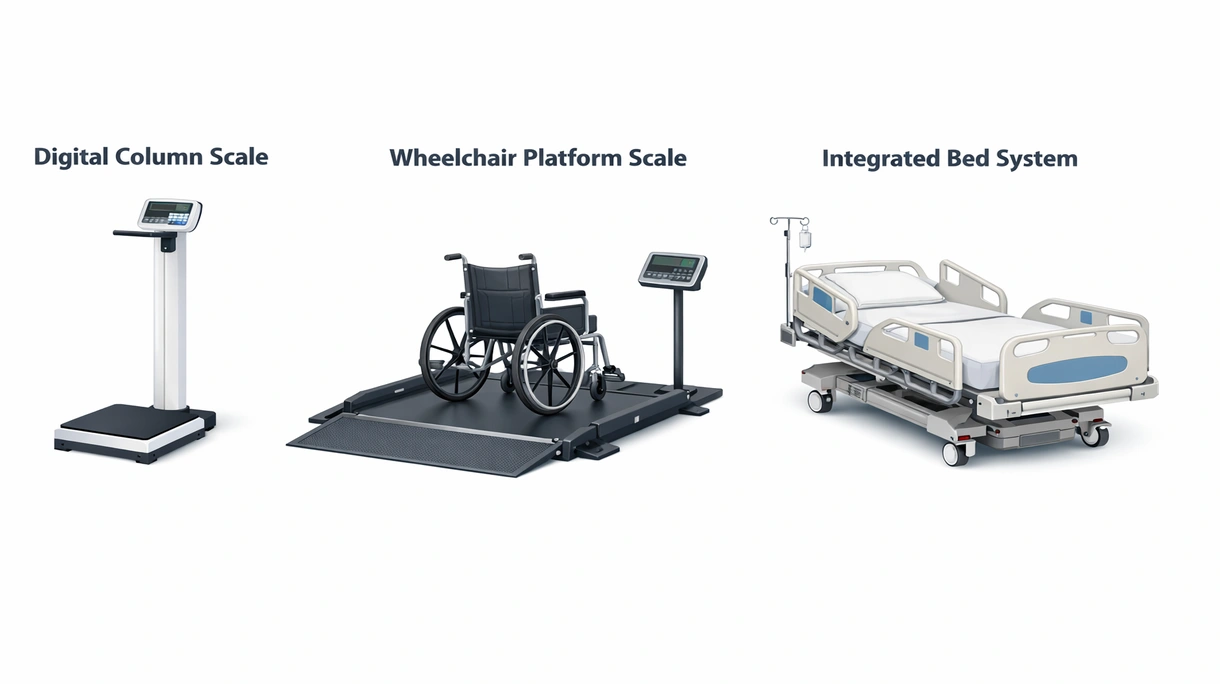
Digital Column Scales
These digital devices utilize high-precision strain gauge sensors to provide rapid weight readings for ambulatory patients in primary care settings and clinics.
Efficiency and Versatility
Durability and cost-efficiency represent primary advantages. However, the inability to support non-ambulatory patients necessitates operational trade-offs regarding facility-wide versatility and patient accessibility.
Wheelchair Platform Scales
Large platforms equipped with heavy-duty ramps allow patients to remain in chairs while multi-cell electronic systems subtract tare weight automatically and accurately.
Throughput and Logistics
High throughput efficiency serves as a major advantage. Significant floor space requirements and high initial capital expenditure represent the main operational limitations for smaller facilities.
Integrated Bed Systems
Designed for intensive care units, these systems integrate load cell sensors directly into mobile frames to weigh immobile patients without physical transfer.
Clinical Care Tradeoffs
Precise fluid monitoring for critical patients is the main advantage. Increased mechanical complexity and higher maintenance requirements are trade-offs for this specialized clinical performance.
6 expert tips
Prioritize EMR-ready scales with Health Level Seven compatibility to automate data entry and enhance patient safety protocols throughout the facility.
Select Class Three medical devices to meet strict European and American legal metrology requirements for all clinical diagnostic applications today.
Invest in antimicrobial surface treatments to reduce bioburden and align with hospital-wide infection prevention and control standards for safety.
Opt for models with high weight capacities and wide platforms to accommodate the increasing bariatric patient population safely and effectively.
Choose scales featuring motion-compensation technology to ensure accurate readings for pediatric or geriatric patients who cannot remain perfectly still.
Always verify the technical certification to ensure compliance with local building safety standards and long-term durability.
Innovations and Trends
Integrated height rods and software provide instant body mass index data to accelerate diagnostic workflows and clinical documentation for practitioners.
Real-time data transmission via Wi-Fi allows centralized fleet management and remote calibration status tracking for multi-site healthcare system operations.
New algorithms allow clinicians to weigh patients by measuring weight difference upon exiting, enhancing safety for unstable or frail individuals.
Global regulatory alignment ensures equipment categorization meets unified safety reporting requirements across diverse international healthcare markets and various clinical jurisdictions.
*Prices are pre-tax. They exclude delivery charges and customs duties and do not include additional charges for installation or activation options. Prices are indicative only and may vary by country, with changes to the cost of raw materials and exchange rates.
About MedicalExpo
MedicalExpo is a marketplace that offers B2B players a complete experience, from product sourcing to purchase. MedicalExpo is an entity of VirtualExpo Group.
Are you a buyer?
Are you a supplier?