
- Home page
- buying guide
- height rod
height rod
height rod: A technical guide
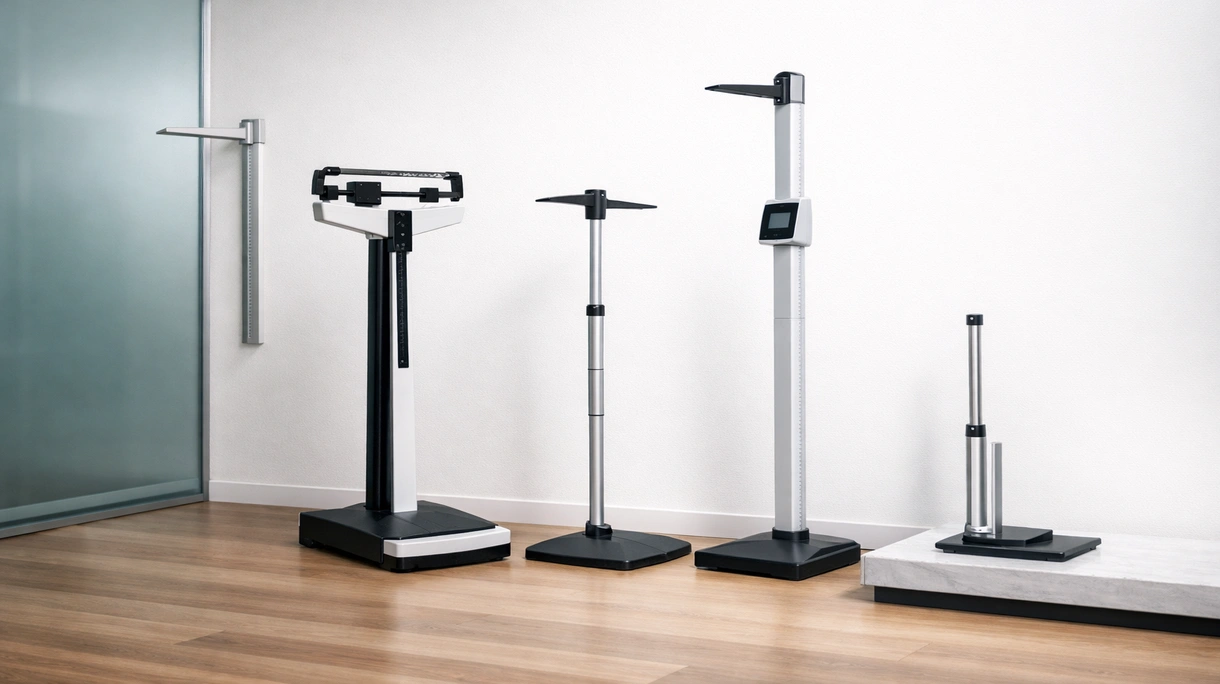
4 Criteria to choose your height rod
Metrological accuracy and resolution
Ensures compliance with global standards for precise clinical diagnostics and growth monitoring across pediatric and adult patient populations.
Medical grade certification
Compliance with European and American medical regulations ensures safety, reliability, and validity of data for electronic health records.
Material durability and hygiene
Non-porous surfaces like anodized aluminum resist medical-grade disinfectants while preventing cross-contamination in high-traffic clinical environments.
Ergonomic integration capabilities
Smooth sliding mechanisms and clear headpieces minimize parallax errors while facilitating quick throughput in busy outpatient clinics.
Available technologies and advantages
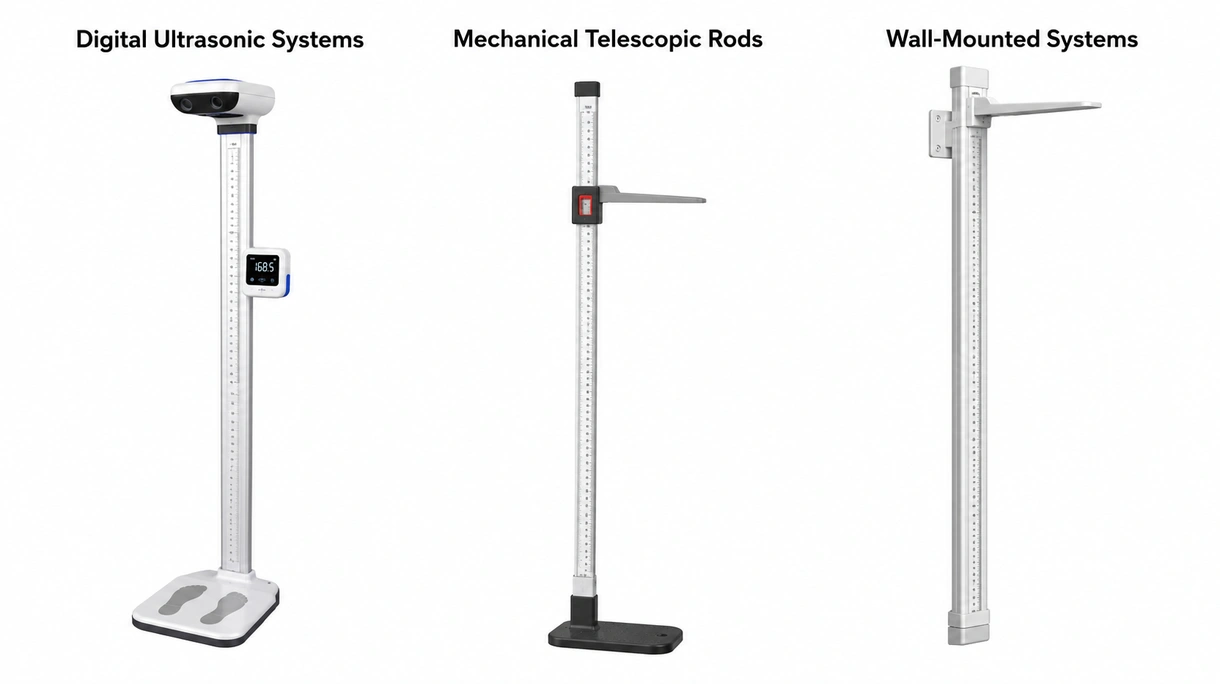
Digital Ultrasonic Systems
These systems utilize high-frequency sound waves to calculate distance without physical contact, offering rapid, non-invasive measurements for pediatric and mobility-challenged patients.
Digital Ultrasonic Systems
These units provide superior speed and data integration but require strict calibration against ambient temperature variations and precise positioning.
Mechanical Telescopic Rods
Traditional telescopic rods use manual sliders and engraved scales, offering a cost-effective, battery-free solution for general practitioners and standard hospital rooms.
Mechanical Telescopic Rods
While exceptionally durable and simple to maintain, manual scales are prone to parallax reading errors and lack automated data recording.
Wall-Mounted Systems
Fixed systems offer the highest stability and zero-point consistency by being permanently anchored to clinical walls, ensuring repeatable longitudinal growth tracking.
Wall-Mounted Systems
Permanent units provide maximum accuracy and space efficiency but lack the portability required for mobile clinics or multi-room use.
6 expert tips
Prioritize electronic medical record integrated rods to eliminate manual transcription errors and streamline clinical workflow across the healthcare network.
Invest in height rods featuring wide headpieces to minimize parallax errors and guarantee consistent measurements for obese patients.
Choose anodized aluminum constructions to resist harsh chemical disinfectants and maintain structural integrity during frequent infection control protocols.
Select models with dual-unit displays to ensure compliance with metric and imperial reporting requirements in international clinical trials.
Evaluate the folding mechanism stability to prevent misalignment and maintain metrological precision during transport between various medical rooms.
Always verify the technical certification to ensure compliance with local building safety standards and long-term durability.
Innovations and Trends
Ensures real-time transmission to patient records, significantly reducing clerical errors and improving departmental operational efficiency.
Provide extremely high precision by automatically adjusting for environmental changes, enhancing diagnostic accuracy for endocrine disorder monitoring.
Utilize silver-ion technology to actively inhibit pathogen growth, meeting the strictest surgical-grade hygiene and safety protocols.
Allow high-precision measurement capabilities in compact mobile clinics without compromising the structural stability required for certification.
*Prices are pre-tax. They exclude delivery charges and customs duties and do not include additional charges for installation or activation options. Prices are indicative only and may vary by country, with changes to the cost of raw materials and exchange rates.
About MedicalExpo
MedicalExpo is a marketplace that offers B2B players a complete experience, from product sourcing to purchase. MedicalExpo is an entity of VirtualExpo Group.
Are you a buyer?
Are you a supplier?