
- Home page
- buying guide
- portable oxygen concentrator
portable oxygen concentrator
portable oxygen concentrator: A technical guide
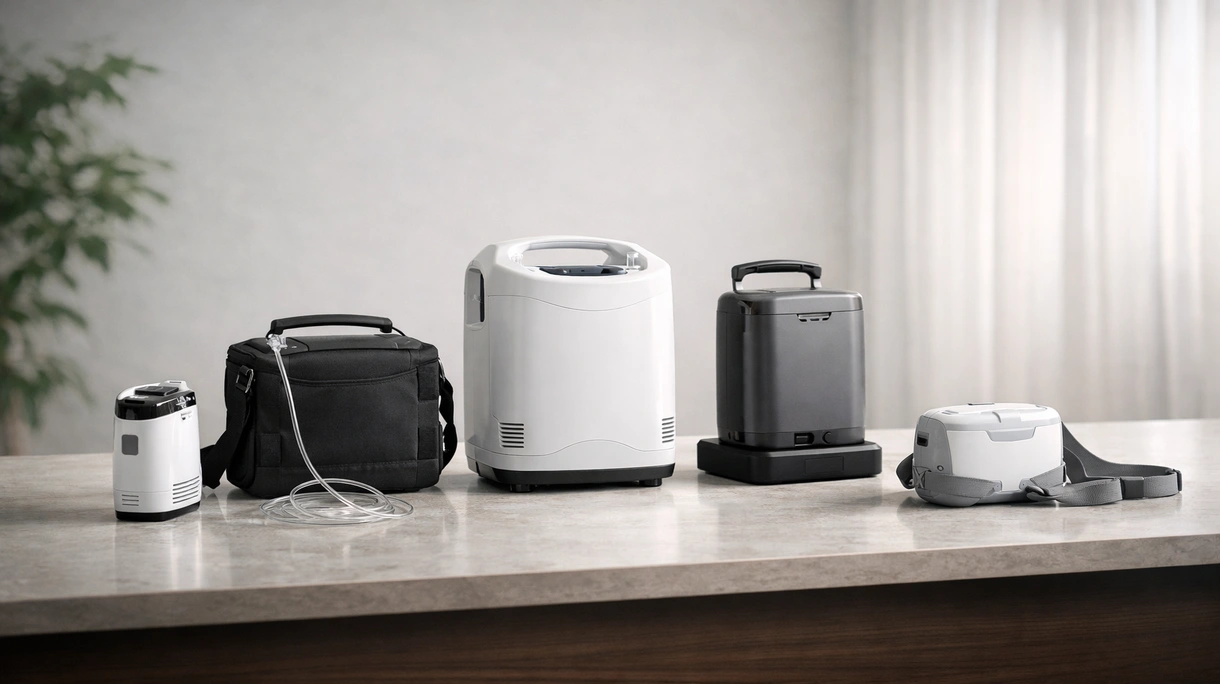
4 Criteria to choose your portable oxygen concentrator
Regulatory and Aviation Compliance.
Equipment must meet FAA standards for air travel and MDR or FDA requirements for clinical and home care safety.
Guaranteed Oxygen Purity Levels.
Units must maintain output above eighty-seven percent across all settings to ensure therapeutic efficacy and avoid dangerous patient desaturation.
Delivery Flow Versatility.
Clinical efficacy depends on pulse dose sensitivity or continuous flow capacity to meet specific patient respiratory demands and activities.
Battery Lifecycle and Weight.
Operational range and weight balance determine patient mobility while modular batteries ensure uninterrupted therapy during long-distance medical transfers.
Available technologies and advantages
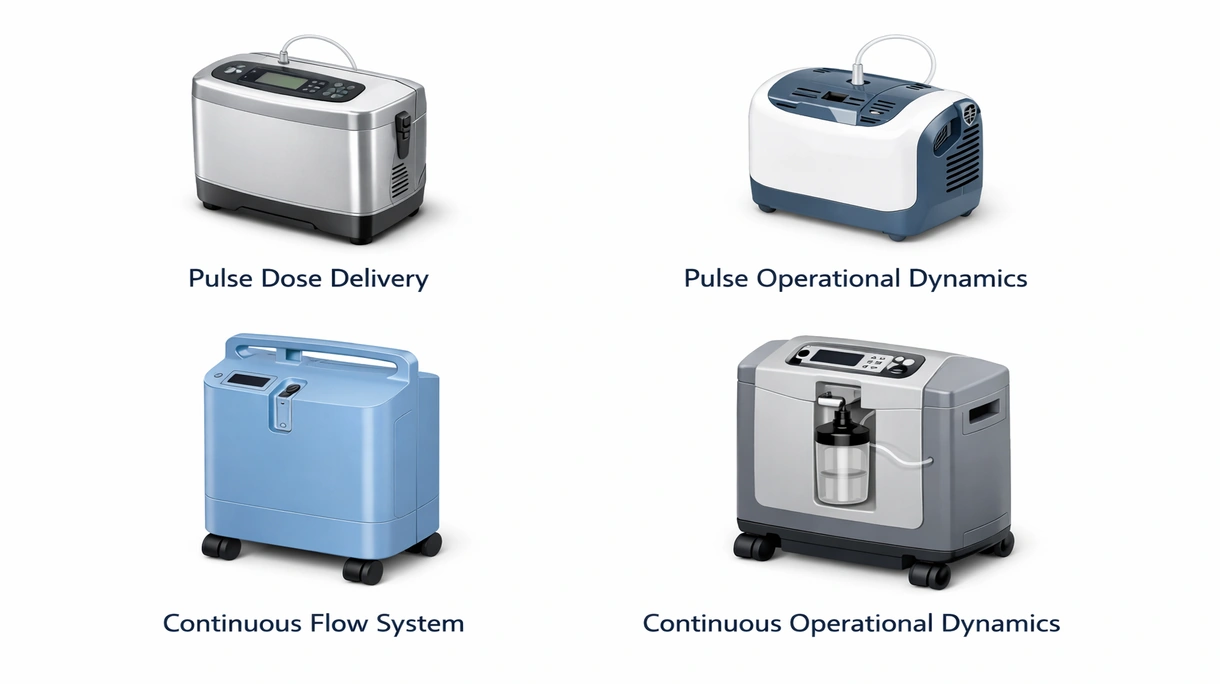
Pulse Dose Delivery.
Pulse units deliver oxygen bursts during inhalation using sensitive pressure triggers, significantly reducing power consumption and hardware size compared to standard fixed oxygen concentrators.
Pulse Operational Dynamics.
These systems maximize patient independence and portability through lightweight designs but may fail to provide adequate oxygenation during periods of sleep or shallow breathing.
Continuous Flow Systems.
Continuous flow systems provide a steady stream of oxygen regardless of the breath cycle, requiring larger internal compressors and significantly higher energy intake for operation.
Continuous Operational Dynamics.
Constant delivery ensures clinical stability for severe respiratory failure though the heavy hardware limits travel and necessitates frequent access to external power sources.
6 expert tips
Prioritize devices with modular sieve beds to reduce long-term maintenance costs and minimize downtime during clinical equipment servicing cycles.
Always verify the technical certification to ensure compliance with local building safety standards and long-term durability.
Analyze the total cost of ownership by evaluating battery replacement prices and the expected lifespan of internal compressor components.
Choose models with integrated telemonitoring capabilities to allow remote clinical oversight and proactive maintenance for large-scale rental fleet management.
Select lightweight units with high-impact protective housing to minimize repair frequencies in demanding homecare or emergency medical environments.
Ensure noise levels remain below forty-five decibels to improve patient compliance and comfort during rest or social interactions.
Innovations and Trends
Advanced algorithms optimize pulse timing based on real-time respiratory rate changes for improved clinical efficiency and battery conservation.
Wireless connectivity enables providers to monitor oxygen purity and usage metrics remotely, enhancing value-based care and compliance.
New molecular sieves increase output per gram, allowing for smaller, lighter devices without sacrificing oxygen concentration performance.
Portable power solutions now include universal solar inputs, extending autonomy for patients in disaster relief or remote areas.
*Prices are pre-tax. They exclude delivery charges and customs duties and do not include additional charges for installation or activation options. Prices are indicative only and may vary by country, with changes to the cost of raw materials and exchange rates.
About MedicalExpo
MedicalExpo is a marketplace that offers B2B players a complete experience, from product sourcing to purchase. MedicalExpo is an entity of VirtualExpo Group.
Are you a buyer?
Are you a supplier?