
- Home page
- buying guide
- nasal cannula
nasal cannula
nasal cannula: A technical guide
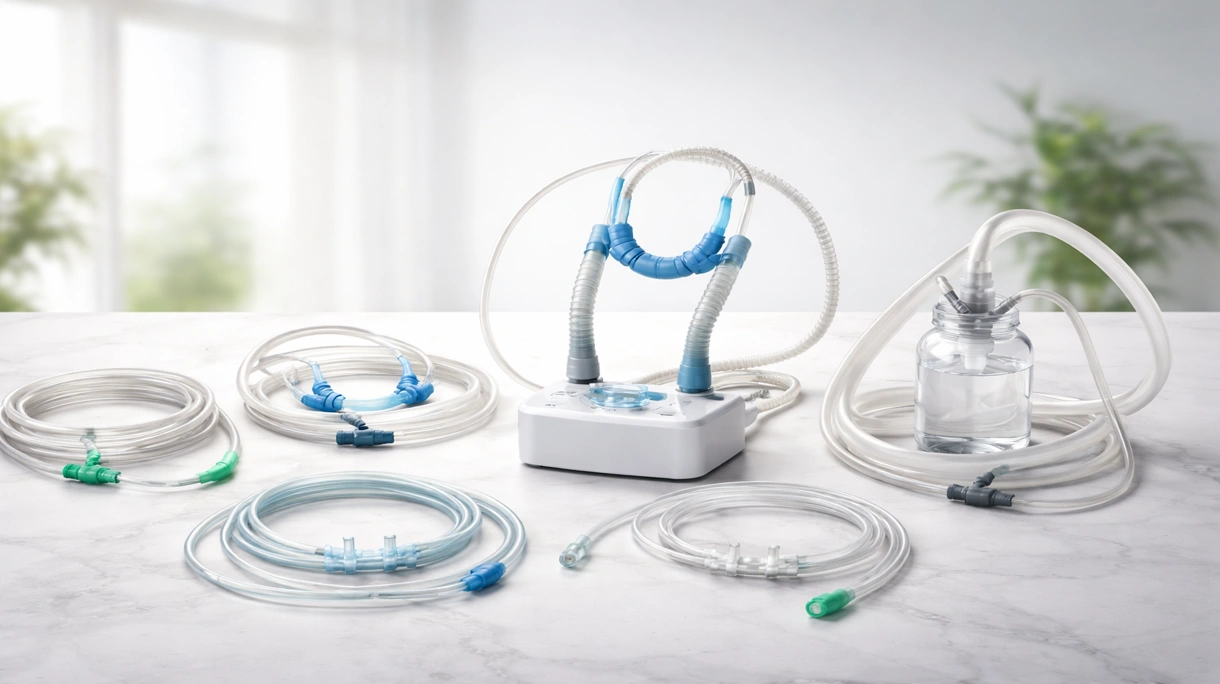
4 Criteria to choose your nasal cannula
Biocompatible medical material compliance
This ensures skin integrity and prevents allergic reactions or pressure ulcers during prolonged respiratory therapy in professional clinical settings.
Precise gas flow stability
Maintaining consistent oxygen saturation levels is critical for preventing hypoxemia during acute or chronic respiratory failure management in hospitals.
Anatomical nasal prong design
Ergonomic shapes reduce nasal mucosal irritation and enhance patient compliance while maintaining optimal positioning during sleep or active movement.
Kink resistant tubing geometry
Star-shaped internal channels prevent gas occlusion and ensure continuous delivery even if the patient rotates or bends the delivery tubing.
Available technologies and advantages
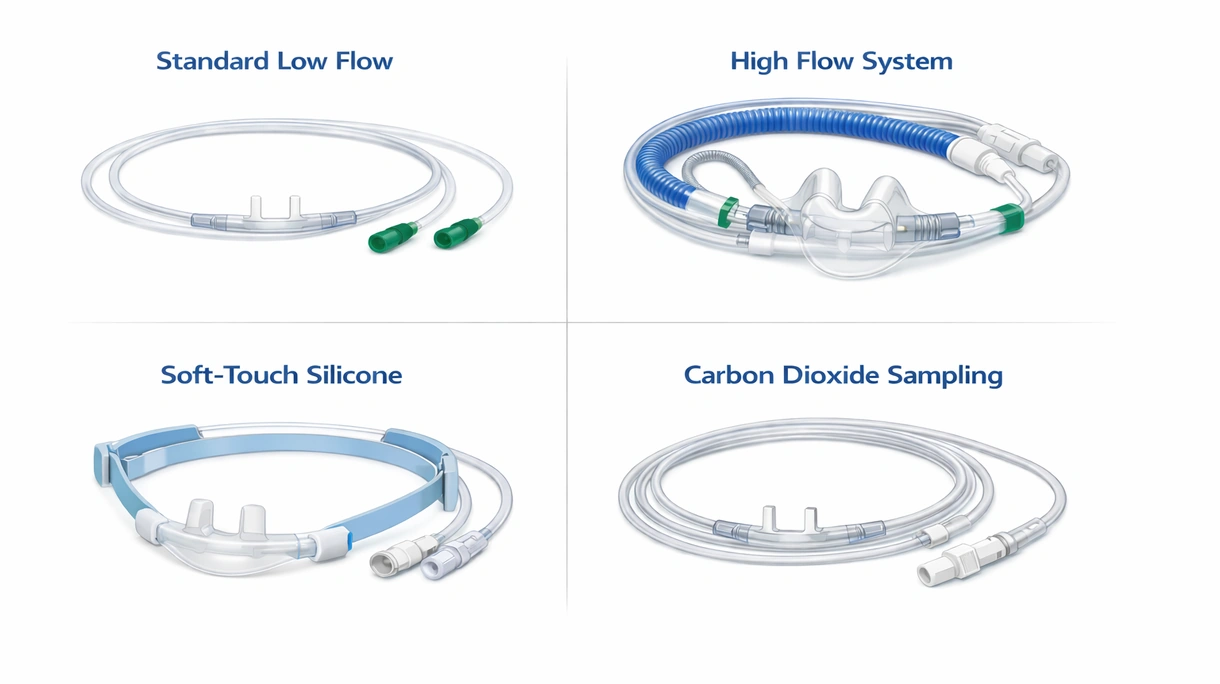
Standard Low Flow
interfaces serve patients requiring supplemental oxygen under six liters. They provide high cost-efficiency but cause mucosal drying, requiring trade-offs between price and comfort.
High Flow Systems
deliver heated gas up to sixty liters for respiratory failure. They offer superior dead space washout but require high capital investment and constant monitoring.
Soft-Touch Silicone
eliminates pressure sores in neonates and geriatric patients with fragile skin. While maximizing patient compliance, they significantly increase the unit cost per respiratory procedure.
Carbon Dioxide Sampling
cannulas enable simultaneous oxygen delivery and capnography. They facilitate early detection of respiratory depression but require compatibility with specific monitoring hardware and sampling lines.
6 expert tips
ensures patient safety while meeting stringent European REACH and American FDA regulatory safety requirements.
guarantees seamless integration across various flowmeters and oxygen concentrators within the clinical supply chain ecosystem.
minimizes mechanical friction on nasal mucosa and reduces the clinical incidence of pressure ulcers.
for high-flow interfaces offset the higher unit costs associated with advanced respiratory support technologies.
ensures the elimination of cross-contamination risks in multi-patient clinical environments and intensive care units.
aligns institutional sustainability goals with maintaining sterile barrier integrity for all medical respiratory consumables. Always verify the technical certification to ensure compliance with local building safety standards and long-term durability.
Innovations and Trends
Prevents skin breakdown in long-term oxygen therapy patients during home and clinical care environments.
Reduce the environmental impact of single-use respiratory consumables without compromising essential clinical performance.
Allows for monitoring respiratory rate and temperature directly at the nasal interface for precise data.
Reduce bacterial colonization on the cannula exterior during extended hospital respiratory treatments and stays.
*Prices are pre-tax. They exclude delivery charges and customs duties and do not include additional charges for installation or activation options. Prices are indicative only and may vary by country, with changes to the cost of raw materials and exchange rates.
About MedicalExpo
MedicalExpo is a marketplace that offers B2B players a complete experience, from product sourcing to purchase. MedicalExpo is an entity of VirtualExpo Group.
Are you a buyer?
Are you a supplier?