
- Home page
- buying guide
- fetal monitor
fetal monitor
fetal monitor: A technical guide
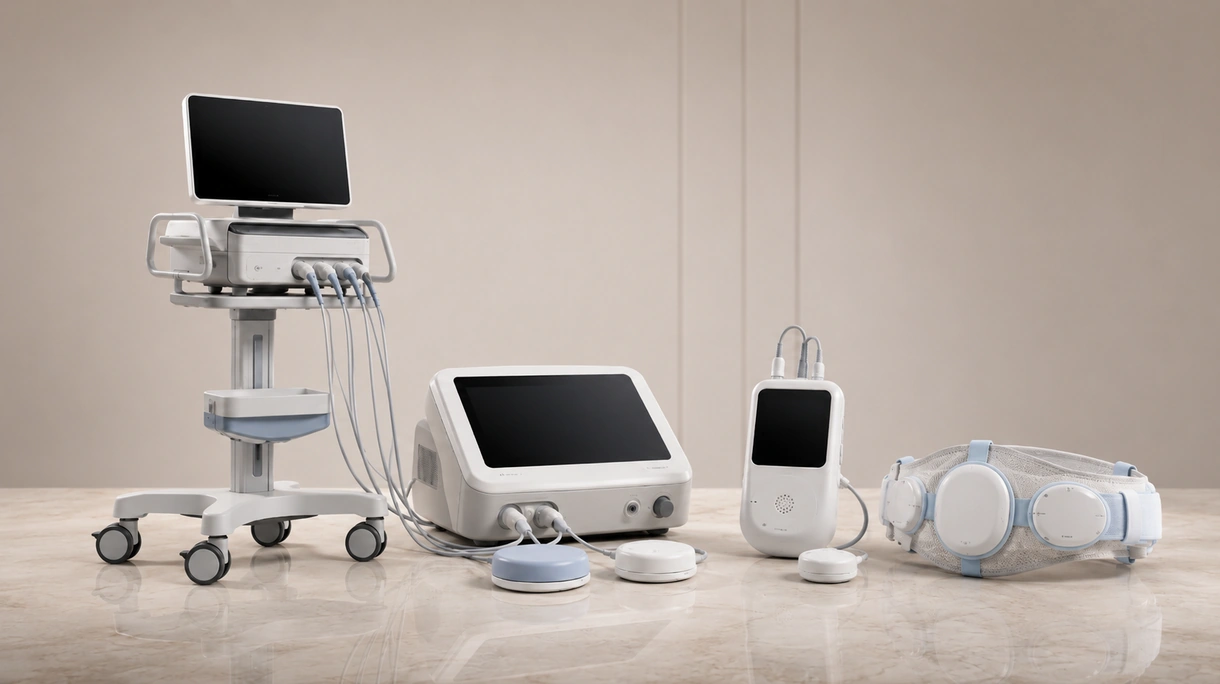
4 Criteria to choose your fetal monitor
Signal Acquisition Accuracy
High-fidelity ultrasound Doppler sensors ensure precise fetal heart rate tracking and uterine activity monitoring during complex labor stages.
Wireless Transducer Connectivity
Cable-free telemetry allows maternal mobility and improves ergonomics while maintaining continuous data transmission without signal dropout or interference.
Automated CTG Analysis
Built-in clinical algorithms provide objective pattern recognition to reduce interpretation variability and enhance early detection of fetal distress.
Central Monitoring Integration
Seamless HL7 compatibility with EMR systems centralizes obstetric data for real-time surveillance across the entire labor and delivery unit.
Available technologies and advantages
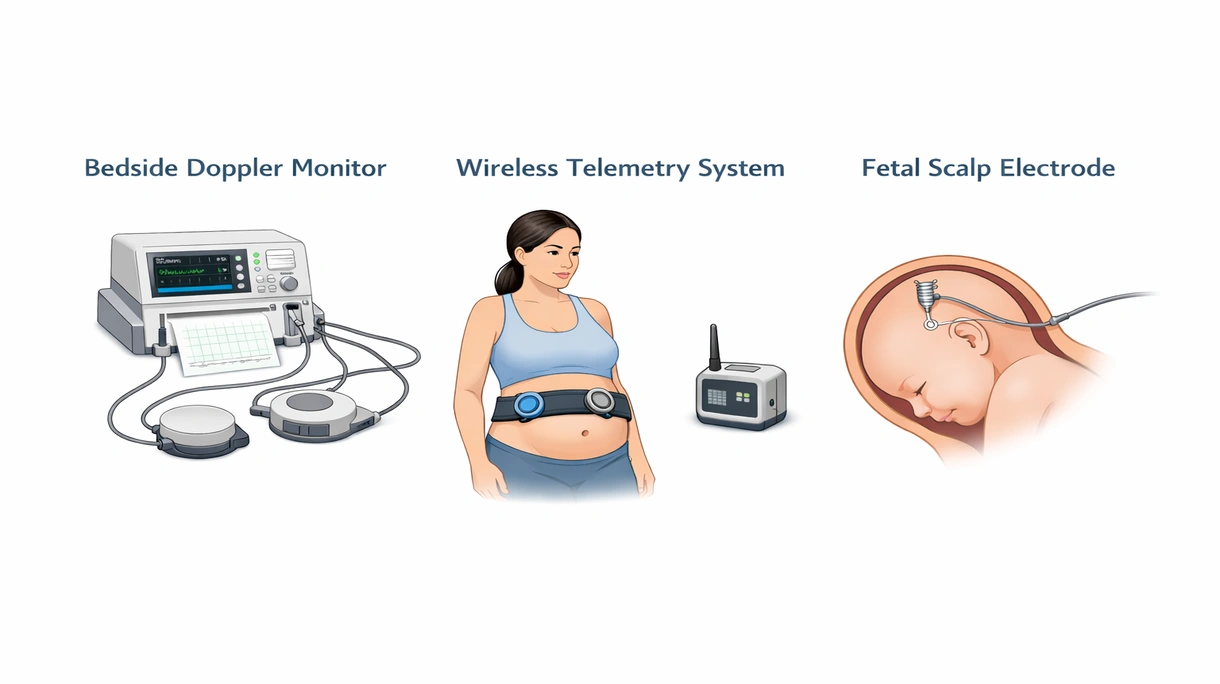
Bedside Doppler Monitors
These stationary units use standard ultrasound transducers and toco-dynamometers to record maternal-fetal parameters within a fixed clinical environment. They offer high reliability and cost-efficiency but restrict patient mobility and increase cable clutter in the delivery room.
Wireless Telemetry Systems
Utilizing waterproof digital transducers, these systems provide untethered monitoring while patients walk or use labor pools for pain management. They improve patient satisfaction and labor progress but require frequent battery management and higher initial capital expenditure investments.
Fetal Scalp Electrodes
This invasive technology attaches a small spiral wire directly to the fetal scalp for high-precision heart rate signal acquisition. It provides the most accurate data during difficult external monitoring but increases infection risks and requires ruptured membranes.
6 expert tips
Prioritize monitors featuring advanced cross-channel verification to prevent accidental maternal heart rate recording instead of the fetal pulse.
Select systems with high-resolution waterproof transducers to support both traditional and water birth protocols within the delivery unit.
Invest in units with integrated battery backup to maintain continuous monitoring during emergency patient transfers or internal power failures.
Ensure the hardware supports direct integration with existing obstetric information systems to streamline electronic health record documentation processes.
Evaluate the total cost of ownership including specialized thermal paper, transducer replacement rates, and software licensing for telemetry.
Verify that all components meet recent FDA and CE certifications for diagnostic accuracy and electromagnetic compatibility in hospital environments.
Always verify the technical certification to ensure compliance with local building safety standards and long-term durability.
Innovations and Trends
Advanced machine learning algorithms provide real-time notification for atypical fetal heart rate decelerations to improve clinical decision-making safety.
Electromyographic sensors capture fetal heart rate and uterine activity without ultrasound, reducing signal loss in high-BMI patient cases.
Remote monitoring platforms allow obstetricians to review live CTG traces from mobile devices while ensuring HIPAA and GDPR compliance.
Single-use adhesive patches replace traditional belts to provide continuous, comfortable monitoring throughout the entire third trimester and labor.
*Prices are pre-tax. They exclude delivery charges and customs duties and do not include additional charges for installation or activation options. Prices are indicative only and may vary by country, with changes to the cost of raw materials and exchange rates.
About MedicalExpo
MedicalExpo is a marketplace that offers B2B players a complete experience, from product sourcing to purchase. MedicalExpo is an entity of VirtualExpo Group.
Are you a buyer?
Are you a supplier?