
- Home page
- buying guide
- stethoscope
stethoscope
stethoscope: A technical guide

4 Criteria to choose your stethoscope
Acoustic Frequency Range
High-performance diaphragms must capture subtle low frequency murmurs and high-frequency lung sounds for accurate diagnostic precision in clinical critical care.
Ambient Noise Isolation
Tight-sealing ear tips and thick-walled tubing are essential to filter disruptive sounds in chaotic emergency rooms or busy clinics.
Biocompatible Material Integrity
Diaphragms and tubing must resist clinical alcohols and skin oils to prevent cracking while ensuring patient safety and hygiene.
Anatomical Ear Canal Fit
Ergonomically angled headsets and soft-sealing tips ensure user comfort during long shifts while maintaining a consistent airtight acoustic seal.
Available technologies and advantages
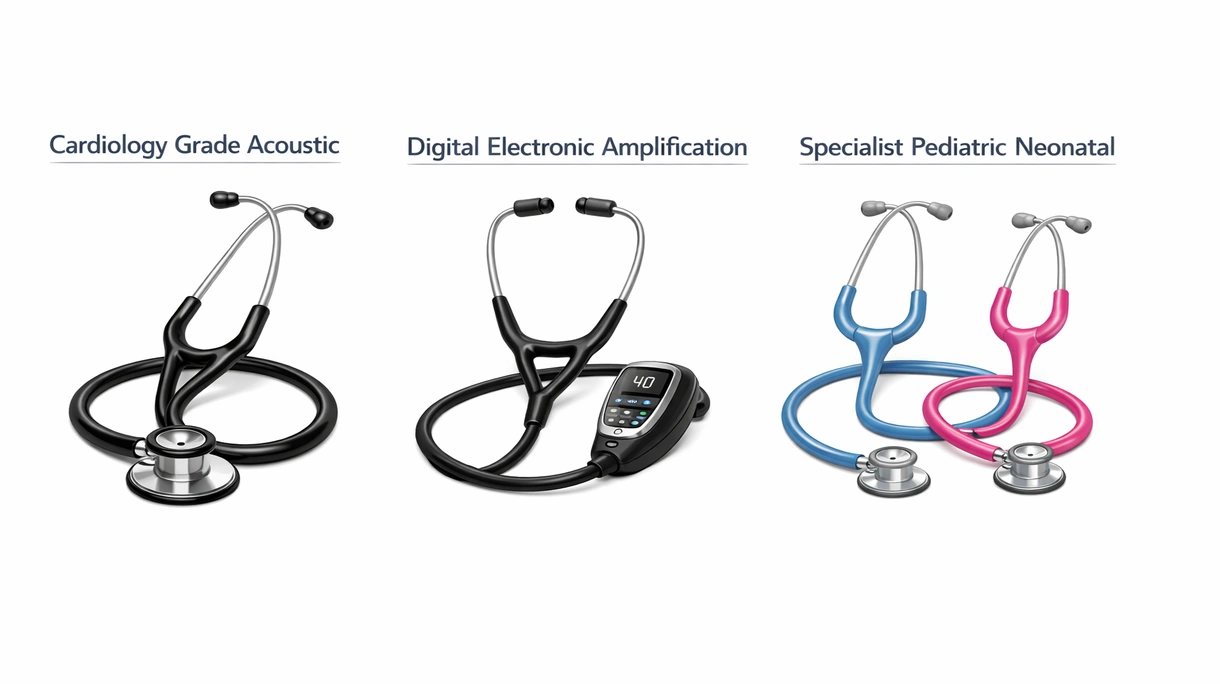
Cardiology Grade Acoustic
These feature dual-lumen tubing and precision-machined stainless steel chestpieces. They provide superior sound isolation for detecting faint murmurs but are heavier and more expensive than standard models.
Digital Electronic Amplification
Offering up to forty times amplification and active noise cancellation, these units facilitate diagnosis in high-decibel environments. However, they require battery management and specialized software training.
Standard Adult Clinical
Versatile single-lumen designs using tunable diaphragms offer a balance between weight and performance. They are cost-effective for general rounds but lack the acoustic depth required for complex cardiology.
Specialist Pediatric Neonatal
Designed with smaller diameters and non-chill rims, these ensure optimal contact on small chest walls. The trade-off is limited frequency range when used on larger adult patients.
6 expert tips
Prioritize stainless steel chestpieces over aluminum to ensure superior sound conduction and long-term durability in high-volume hospital environments.
Invest in active noise-canceling digital models for clinicians working in emergency transport or noisy intensive care unit settings.
Select dual-lumen tubing designs to eliminate the friction noise of single tubes rubbing together during critical cardiac auscultation.
Standardize on latex-free and phthalate-free materials to minimize allergic reactions for both medical staff and sensitive patient populations.
Choose models with tunable diaphragm technology to allow switching between high and low frequencies without flipping the chestpiece.
Ensure all procured devices carry medical certification for high class medical devices to meet strict regulatory compliance standards.
Always verify the technical certification to ensure compliance with local building safety standards and long-term durability.
Innovations and Trends
Built-in algorithms identify cardiac murmurs with ninety percent accuracy, significantly reducing diagnostic errors during routine primary care screenings.
Wireless transmission of heart sounds enables real-time remote consultations and secure digital recording for electronic health record integration.
Self-disinfecting surfaces on tubing and chestpieces reduce cross-contamination risks and meet evolving international hygiene and infection control standards.
Integrated screens on digital headsets provide real-time phonocardiogram visuals, allowing clinicians to see sounds for better diagnostic accuracy.
*Prices are pre-tax. They exclude delivery charges and customs duties and do not include additional charges for installation or activation options. Prices are indicative only and may vary by country, with changes to the cost of raw materials and exchange rates.
About MedicalExpo
MedicalExpo is a marketplace that offers B2B players a complete experience, from product sourcing to purchase. MedicalExpo is an entity of VirtualExpo Group.
Are you a buyer?
Are you a supplier?