
- Home page
- buying guide
- aneroid sphygmomanometer
aneroid sphygmomanometer
aneroid sphygmomanometer: A technical guide
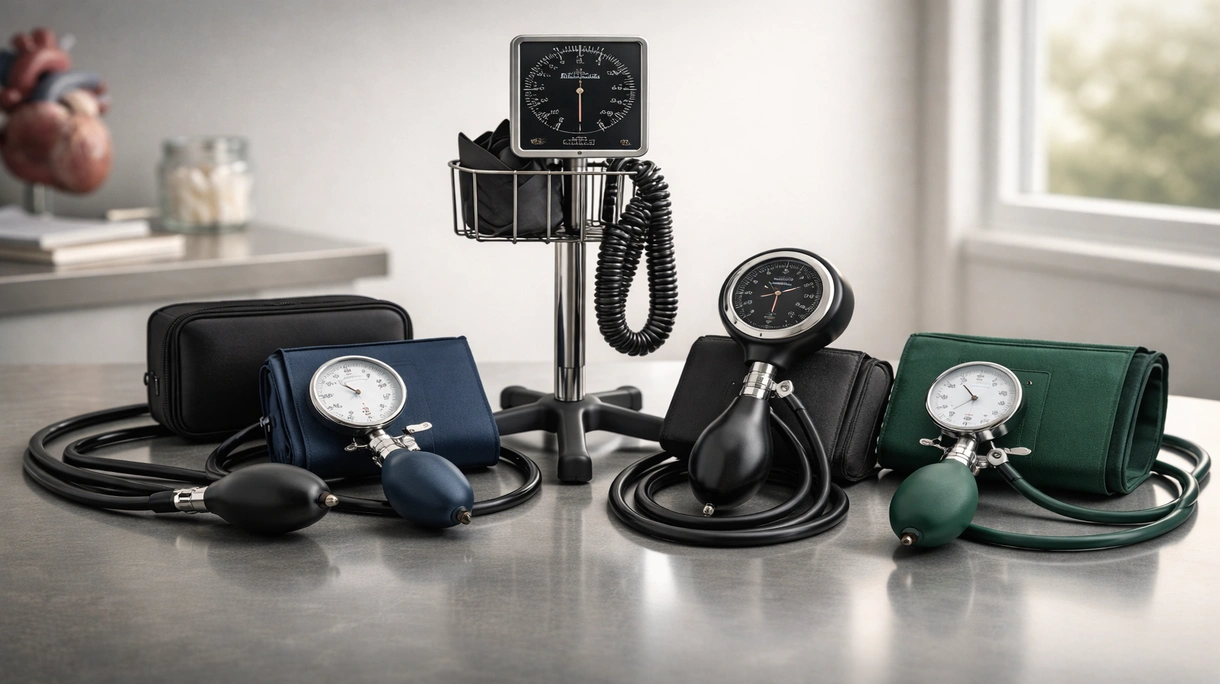
4 Criteria to choose your aneroid sphygmomanometer
Shockproof movement durability
Precision mechanisms must resist impact-related decalibration during daily ward rounds to ensure long-term clinical measurement reliability and safety.
Accuracy calibration certification
Verified compliance with international standards guarantees pressure readings stay within minimal mercury levels for clinical diagnostic precision.
Manometer cuff compatibility
Universal connectors enable rapid switching between pediatric and bariatric cuffs, optimizing clinical workflows across diverse patient demographic groups.
Latex-free material safety
Using medical-grade polymers eliminates anaphylactic risks for patients and staff while meeting stringent healthcare facility infection control requirements.
Available technologies and advantages
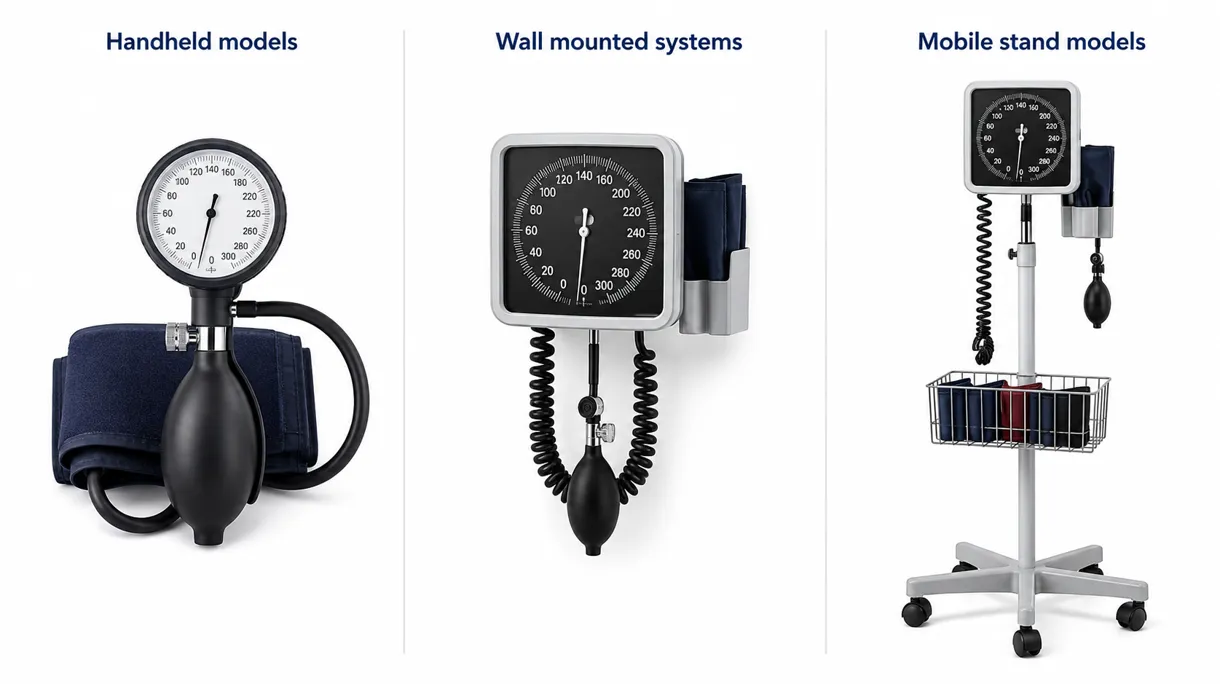
Integrated handheld models
These units feature the gauge mounted directly on the inflation bulb, allowing for efficient single-handed operation during rapid patient assessments. They offer excellent mobility but require frequent calibration due to high drop risks in fast-paced environments.
Wall mounted systems
Fixed installations provide large, high-visibility dials and coiled tubing, minimizing device loss while ensuring constant availability in examination rooms. They provide maximum durability but restrict assessments to fixed clinical stations.
Mobile stand models
Adjustable height pedestals with heavy bases offer clinical flexibility across multiple bedsides while housing expansive storage for various cuff sizes. This configuration enhances visibility and reach despite requiring significant floor clearance.
6 expert tips
Select shock-resistant movements to reduce recalibration frequency and lower the total cost of ownership over prolonged clinical cycles.
Prioritize validated devices meeting European EN ISO standards to ensure diagnostic accuracy and mitigate legal risks in clinical settings.
Implement standardized screw-thread connectors across all departments to facilitate immediate cuff interchangeability and improve staff response times significantly.
Invest in copper-beryllium membranes instead of traditional springs to maintain pressure sensitivity and prevent mechanical fatigue over time.
Source antimicrobial treated cuffs to enhance infection control protocols and reduce cross-contamination risks within high-traffic surgical units.
Always verify the technical certification to ensure compliance with local building safety standards and long-term durability.
Innovations and Trends
Significantly enhances mechanical durability by removing fragile linkages that frequently cause decalibration after clinical impacts.
Meet evolving European environmental regulations while maintaining necessary flexibility for repeated clinical usage in wards.
Improve visual clarity and measurement precision by eliminating inaccuracies associated with traditional silk-screened gauge manufacturing.
Systems allow facilities to verify instrument accuracy internally, ensuring strict compliance with hospital quality standards.
*Prices are pre-tax. They exclude delivery charges and customs duties and do not include additional charges for installation or activation options. Prices are indicative only and may vary by country, with changes to the cost of raw materials and exchange rates.
About MedicalExpo
MedicalExpo is a marketplace that offers B2B players a complete experience, from product sourcing to purchase. MedicalExpo is an entity of VirtualExpo Group.
Are you a buyer?
Are you a supplier?