
- Home page
- buying guide
- walking stick
walking stick
walking stick: A technical guide
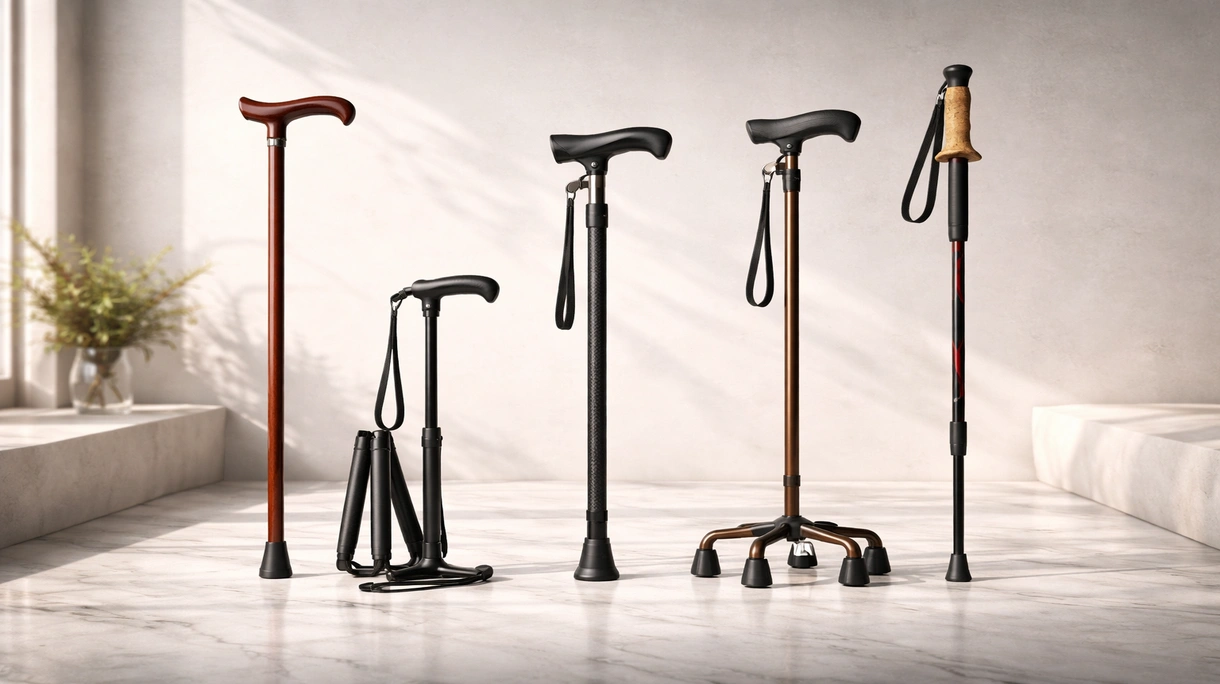
4 Criteria to choose your walking stick
Load Bearing Capacity
Ensures structural integrity for bariatric patients while preventing catastrophic failure during weight-bearing phases of the clinical gait cycle.
Ergonomic Handle Geometry
Distributes pressure across the palmar surface to minimize carpal tunnel stress and maximize user compliance during long-term mobility recovery.
Adjustable Height Range
Facilitates precise fitting to the proximal femoral greater trochanter, ensuring optimal biomechanical alignment and reducing secondary joint strain.
Base Surface Friction
Provides high-friction surface contact on diverse medical facility floorings, ensuring patient stability and reducing hospital-acquired fall incidents.
Available technologies and advantages
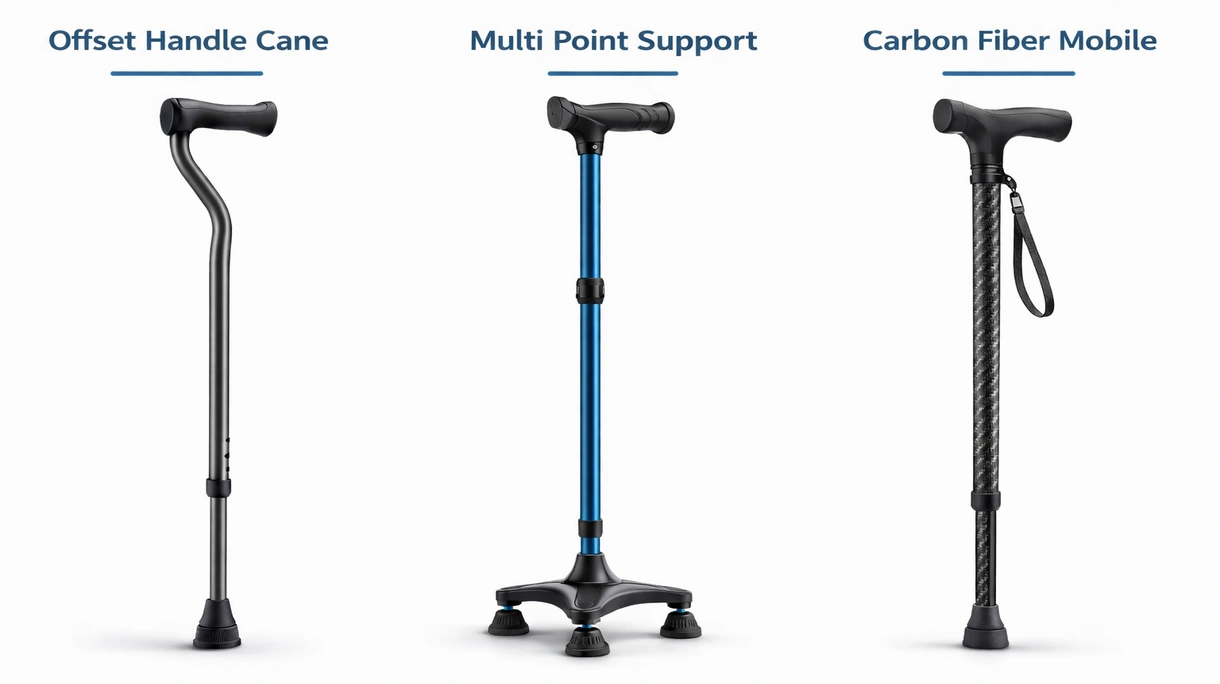
Offset Handle Canes
Aluminum structures featuring a swan-neck curve center weight over the shaft for stability. Advantages include superior weight distribution; limitations include fixed grips; trade-offs involve portability versus structural rigidity.
Multi Point Supports
Utilizing a wide foundation, these devices offer maximum stability for patients with neurological deficits. Advantages include self-standing capability; limitations involve trip hazards; trade-offs focus on stability versus speed.
Carbon Fiber Mobiles
Constructed from advanced composites, these lightweight sticks reduce upper extremity fatigue during rehabilitation. Advantages involve extreme durability-to-weight ratios; limitations include higher costs; trade-offs center on material premium versus ergonomics.
6 expert tips
Always verify the technical certification to ensure compliance with local building safety standards and long-term durability.
Prioritize ISO certified carbon fiber frames to ensure maximum durability while minimizing caregiver strain during patient handling maneuvers.
Standardize procurement on models with replaceable non-marking rubber tips to maintain facility hygiene and reduce long-term maintenance expenditure.
Implement height-adjustable telescopic shafts with double-locking pins to ensure structural safety across a diverse range of patient morphologies.
Verify that all selected models feature anti-rattle locking mechanisms to provide silence and psychological security during clinical ambulation.
Select anatomical grip designs specifically tested for geriatric users to prevent pressure sores and improve patient treatment adherence.
Innovations and Trends
Integration of pressure sensors provides real-time data on weight distribution, improving clinical outcomes through precise gait analysis.
Advanced silver-ion surfaces significantly reduce cross-contamination risks in high-traffic hospital environments and long-term care facilities.
Rapid-change ferrule systems allow seamless transition between indoor clinical flooring and outdoor therapeutic surfaces for versatile rehabilitation.
Shift toward recyclable thermoplastic composites meets green procurement mandates without compromising structural integrity or patient weight capacity.
*Prices are pre-tax. They exclude delivery charges and customs duties and do not include additional charges for installation or activation options. Prices are indicative only and may vary by country, with changes to the cost of raw materials and exchange rates.
About MedicalExpo
MedicalExpo is a marketplace that offers B2B players a complete experience, from product sourcing to purchase. MedicalExpo is an entity of VirtualExpo Group.
Are you a buyer?
Are you a supplier?