
C-arm
C-arm: A technical guide
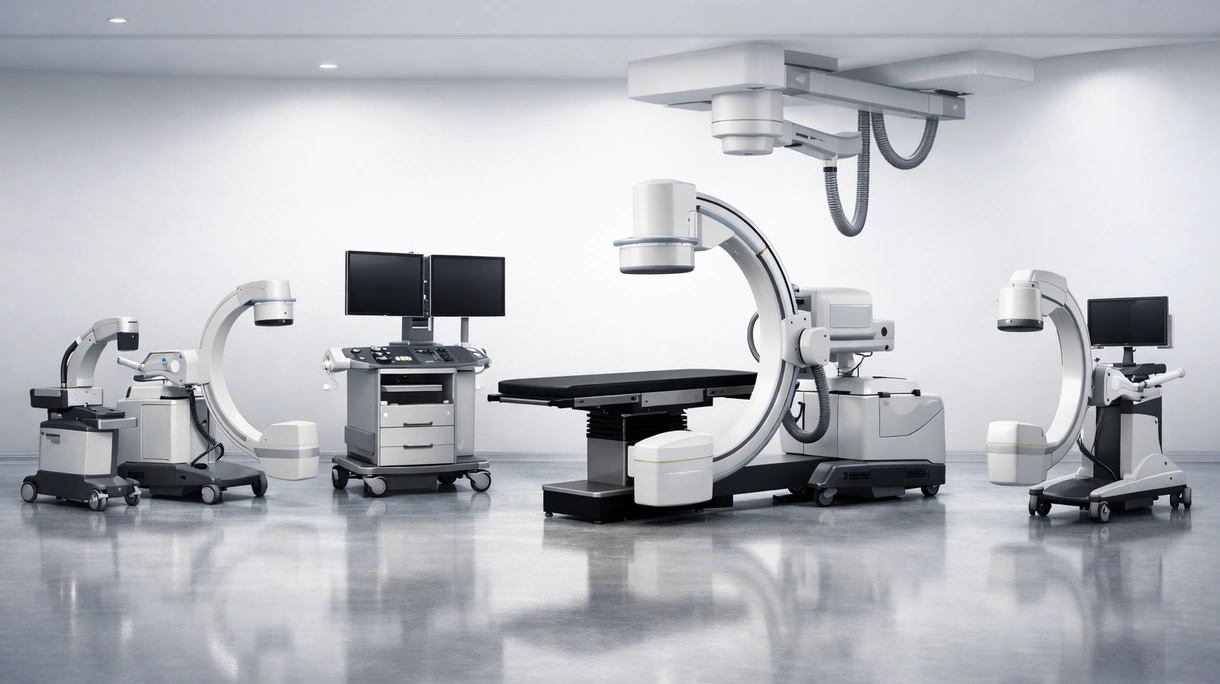
4 Criteria to choose your C-arm
Image Resolution Quality
High-definition imaging ensures precise anatomical visualization during complex surgical procedures while minimizing the risk of diagnostic errors or complications.
Radiation Dose Management
Advanced pulsed fluoroscopy and low-dose settings protect clinical staff and patients from unnecessary exposure while maintaining diagnostic image clarity.
System Maneuverability Performance
Compact footprints and multi-axis movement facilitate rapid positioning in crowded operating rooms, improving surgical efficiency and reducing procedure times.
Hospital Workflow Integration
Seamless DICOM connectivity and intuitive interfaces allow for rapid data transfer and synchronization with hospital information systems and PACS.
Available technologies and advantages
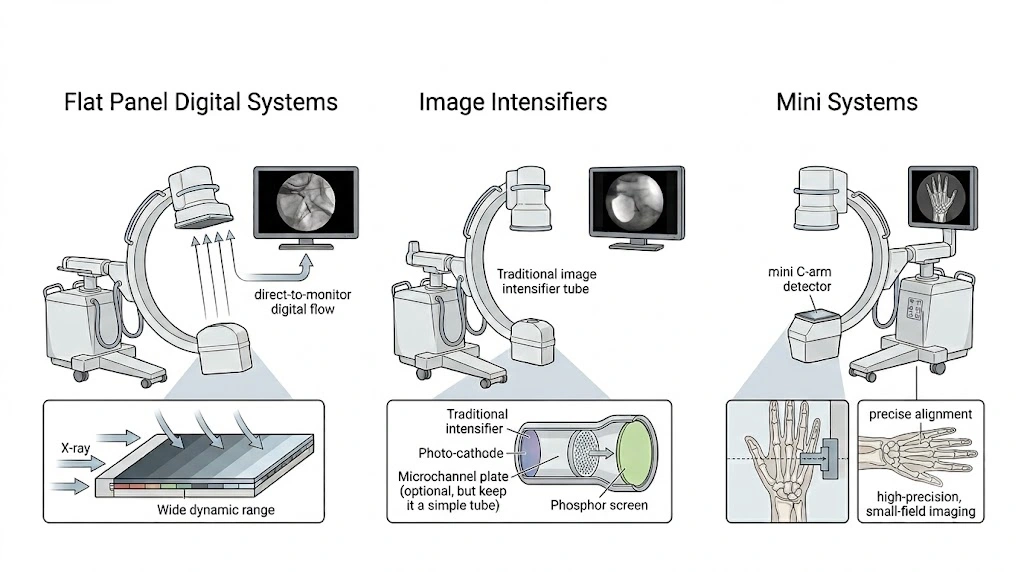
Flat Panel Digital Comparison
These digital systems replace traditional image intensifiers, offering a wider dynamic range and distortion-free imaging for high-precision surgical guidance and performance.
Flat Panel Operational Trade-offs
These models provide superior image quality and lower radiation exposure; however, the higher acquisition costs represent a significant initial financial investment.
Image Intensifier Comparison
Utilizing vacuum tubes to convert X-rays into light, these systems provide reliable performance for standard orthopedic, general surgery, and basic pain management.
Intensifier Operational Trade-offs
These models offer cost-effective entry points for clinics but suffer from bulkier profiles and potential peripheral image distortion compared to digital alternatives.
Mini System Comparison
Specifically designed for extremities, these compact units prioritize high-resolution imaging of hands and feet within very small clinical footprints for outpatient centers.
Mini System Operational Trade-offs
Excellent ergonomics for specialized clinics provide high maneuverability, yet they lack the necessary power and field of view for complex abdominal procedures.
6 expert tips
Prioritize flat panel detector technology to ensure clinical longevity and superior visualization during high-complexity vascular and cardiac interventions.
Evaluate total cost of ownership including specialized maintenance contracts and mandatory radiation safety training for hospital clinical staff.
Select systems with modular software architectures to allow for future upgrades without requiring immediate replacement of hardware components.
Always verify the technical certification to ensure compliance with local building safety standards and long-term durability.
Assess the integration capabilities with existing hospital PACS and DICOM networks to prevent data silos and workflow bottlenecks.
Mandate comprehensive on-site clinical training for all surgical technicians to maximize equipment utilization and patient safety during operations.
Innovations and Trends
AI-powered image enhancement and noise reduction algorithms significantly improve visualization while reducing the required radiation dose for patients.
Volume reconstruction imaging allows surgeons to verify implant placement in real-time, reducing the need for costly revision surgeries.
AR navigation overlays projected onto the surgical field assist in precise needle placement and anatomy navigation during minimally invasive procedures.
Advanced lightweight materials in the C-arm structure improve maneuverability and reduce the physical strain on surgical staff members.
*Prices are pre-tax. They exclude delivery charges and customs duties and do not include additional charges for installation or activation options. Prices are indicative only and may vary by country, with changes to the cost of raw materials and exchange rates.
About MedicalExpo
MedicalExpo is a marketplace that offers B2B players a complete experience, from product sourcing to purchase. MedicalExpo is an entity of VirtualExpo Group.
Are you a buyer?
Are you a supplier?