
- Home page
- buying guide
- intensive care ambulance
intensive care ambulance
intensive care ambulance: A technical guide
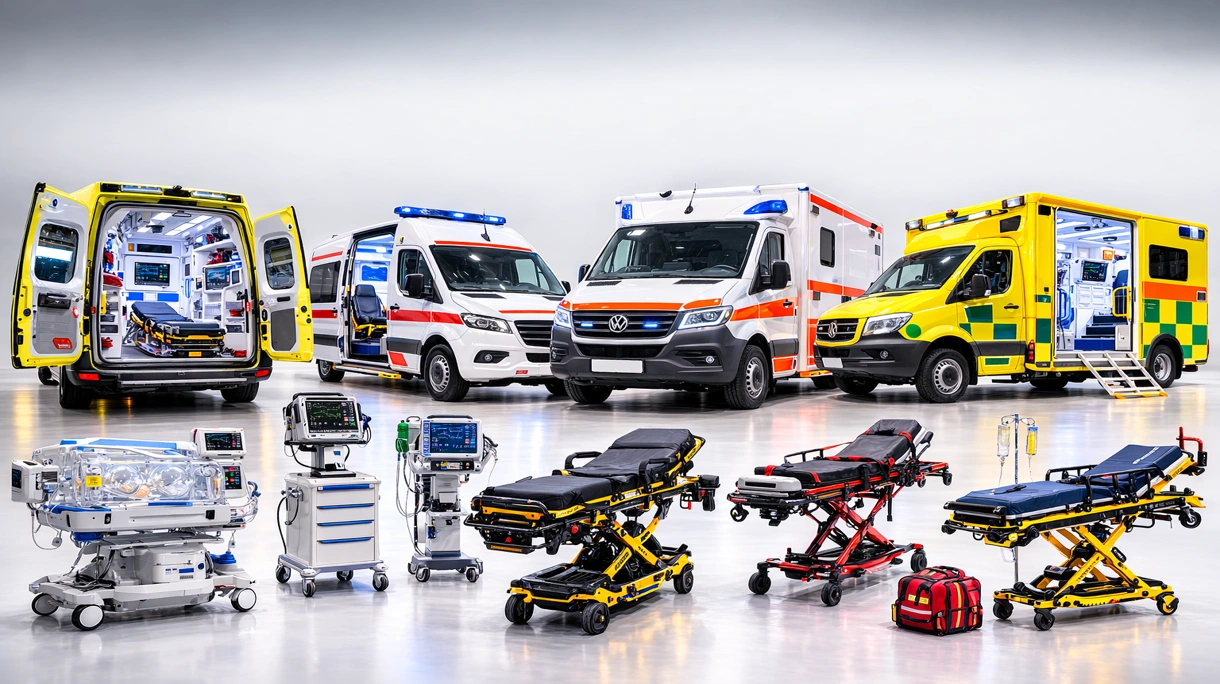
4 Criteria to choose your intensive care ambulance
Advanced patient stabilization capacity
Integration of high-end ventilators and monitoring systems ensures continuous life support for critical patients during high-risk inter-hospital transfers.
Ergonomic medical interior layout
Space optimization must facilitate 360-degree patient access while maintaining strict infection control standards and clinician safety during transit.
Reliable auxiliary power systems
Redundant power supplies and high-capacity inverters are essential to maintain life-sustaining equipment functionality without depleting the vehicle battery.
EN1789 crash safety compliance
Strict adherence to crash-test regulations protects both the medical crew and the patient by securing heavy life-support devices.
Available technologies and advantages
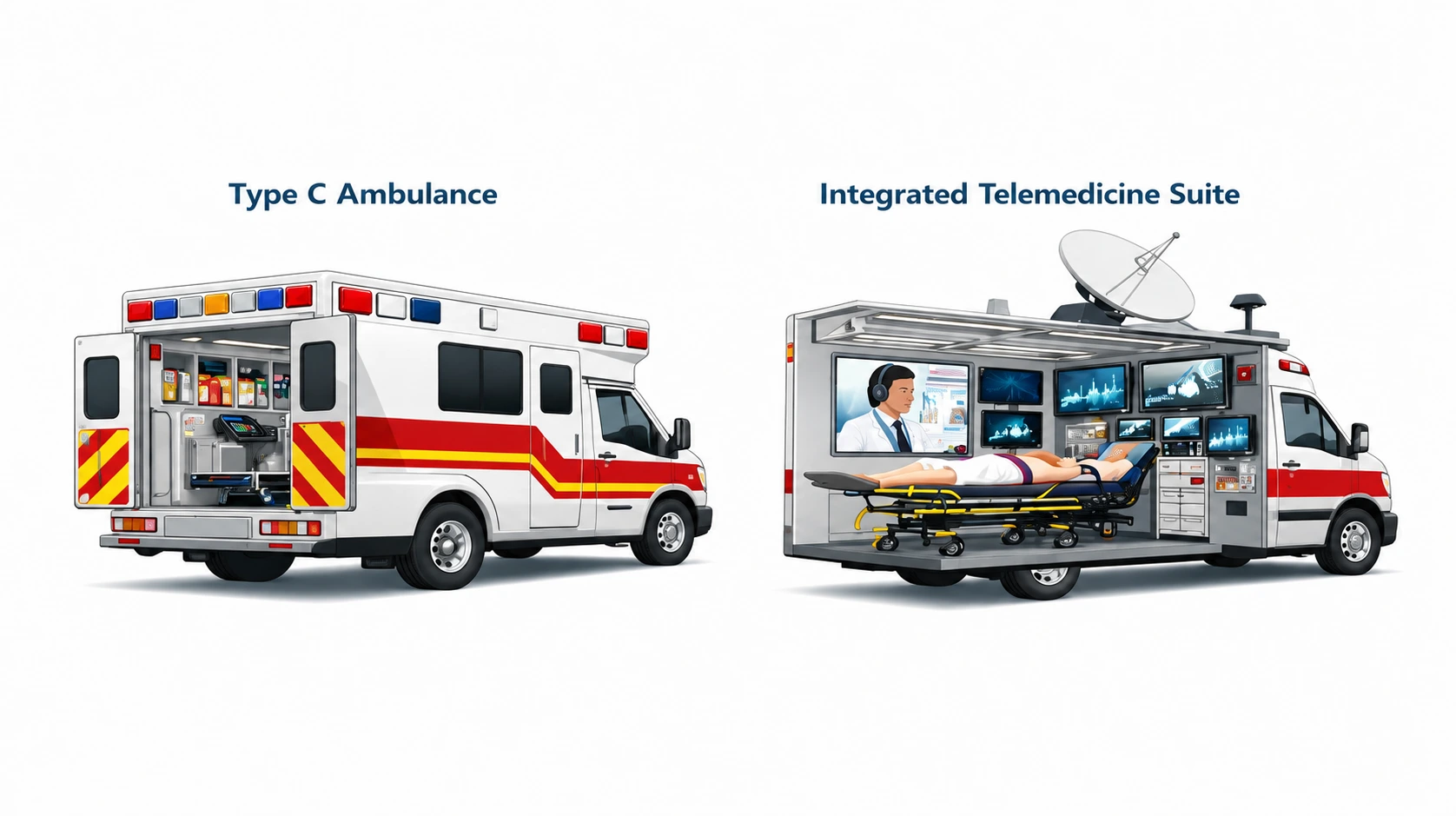
Type C Ambulance Platforms
High-volume modular bodies provide maximum workspace for specialized teams compared to standard vans, though they increase vehicle weight. They offer superior clinical storage but sacrifice urban maneuverability and fuel efficiency.
Integrated Telemedicine Suites
Satellite-linked communication systems enable real-time data transmission to receiving trauma centers, allowing for early diagnostic intervention. These systems enhance patient outcomes but require significant initial investment and high-bandwidth subscriptions.
Active Suspension Systems
Hydro-pneumatic leveling ensures extreme stability during transit to prevent physiological distress or equipment displacement on uneven roads. While improving patient comfort and procedure accuracy, these systems increase mechanical complexity and maintenance.
6 expert tips
Prioritize modular interior designs that allow for rapid reconfiguration as clinical needs and life-support technologies evolve over time.
Ensure the electrical architecture supports simultaneous operation of high-draw ventilators, infusion pumps, and advanced multi-parameter patient monitoring systems.
Verify that all internal surfaces meet ISO 22196 standards for antimicrobial efficacy to minimize healthcare-associated infection risks.
Select chassis providers with extensive regional service networks to minimize operational downtime and ensure consistent emergency fleet availability.
Invest in telematics systems that monitor both vehicle health and clinical equipment status for proactive fleet management strategies.
Always verify the technical certification to ensure compliance with local building safety standards and long-term durability.
Innovations and Trends
Automatically sanitize the patient compartment between calls, reducing manual cleaning times by forty percent.
Are gaining traction to meet municipal sustainability mandates while providing silent operation for patients.
Integrate navigation and vital patient alerts, minimizing distractions while ensuring safer high-speed emergency response.
Assists paramedics by analyzing real-time ECG data to accelerate treatment decisions before reaching the hospital.
*Prices are pre-tax. They exclude delivery charges and customs duties and do not include additional charges for installation or activation options. Prices are indicative only and may vary by country, with changes to the cost of raw materials and exchange rates.
About MedicalExpo
MedicalExpo is a marketplace that offers B2B players a complete experience, from product sourcing to purchase. MedicalExpo is an entity of VirtualExpo Group.
Are you a buyer?
Are you a supplier?