
- Home page
- buying guide
- spirometer
spirometer
spirometer: A technical guide
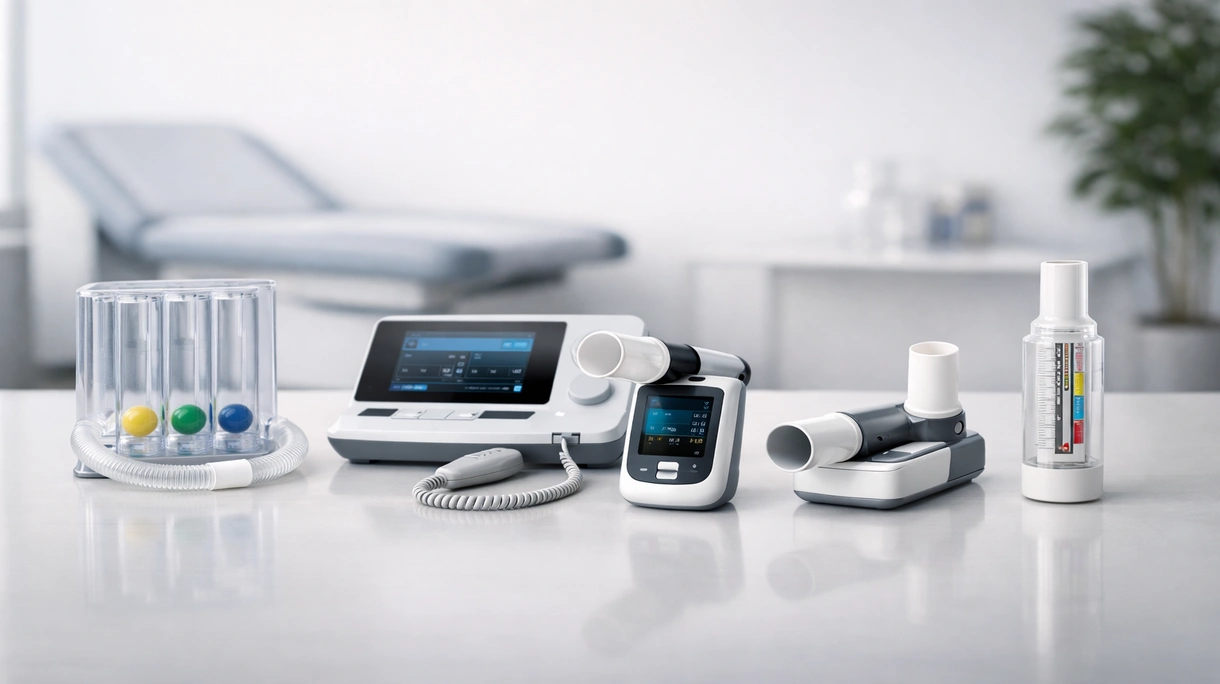
4 Criteria to choose your spirometer
Measurement accuracy and repeatability
Clinical compliance with current standards ensures that lung volume readings are medically valid for diagnostic and longitudinal tracking.
Infection control and hygiene
Integration of high-efficiency bacterial filters or disposable flow sensors is essential to prevent cross-contamination between different patients.
Software and database connectivity
Automated data transfer capabilities reduce manual entry errors and streamline patient record management within modern digital infrastructures.
Calibration stability and maintenance
Reliable sensors that maintain precision over time minimize operational downtime and the need for frequent technical recalibration.
Available technologies and advantages
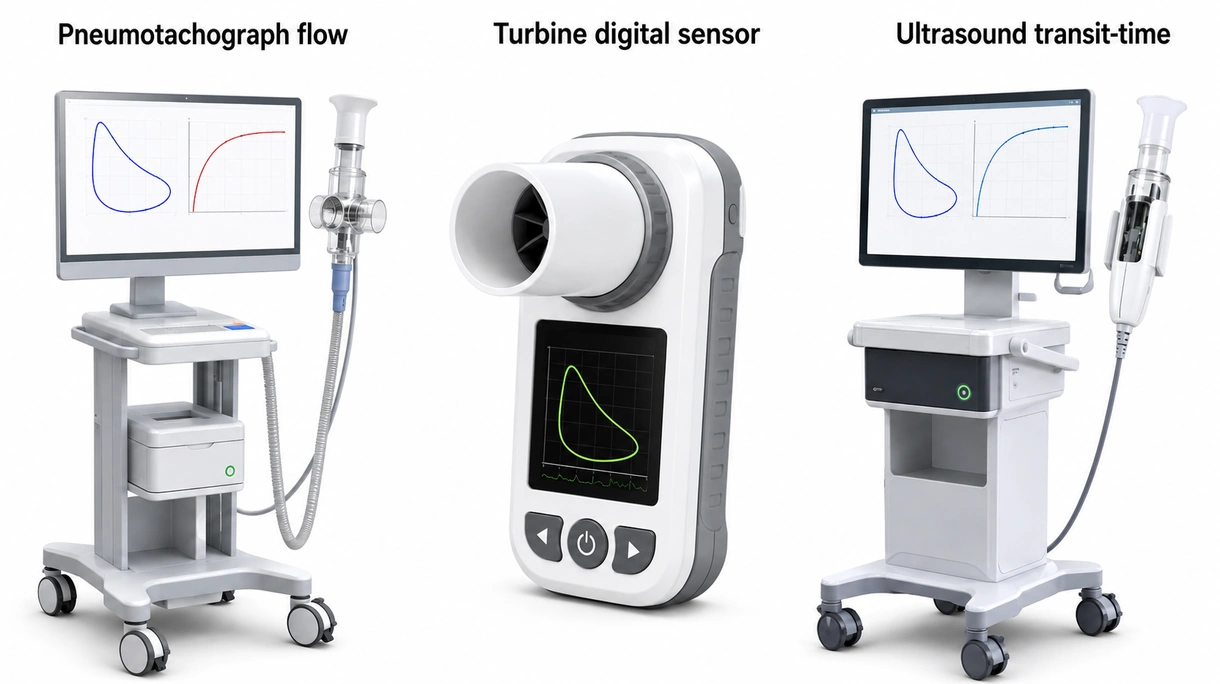
Pneumotachograph flow technology
This sensor measures pressure drops across a resistive element to determine flow, providing the high-precision measurements required for hospital-grade clinical diagnostics.
Operational performance trade-offs
These sensors offer excellent low-flow sensitivity but require frequent recalibration and heating to manage condensation, effectively increasing total long-term operational costs.
Turbine digital sensors
Rotating blades translate airflow into digital signals, offering a durable and highly portable solution for primary care and screening environments.
Digital sensor trade-offs
Mechanical turbines are humidity-resistant and cost-effective for screening, yet they exhibit physical inertia that can affect measurement accuracy at low flow rates.
Ultrasound transit-time technology
High-frequency sound waves measure gas velocity directly, representing the current technological peak for maintenance-free and high-precision hospital respiratory testing equipment.
Ultrasound technological trade-offs
This technology provides maintenance-free operation and high precision across all flows, though the initial purchase price is significantly higher than mechanical alternatives.
6 expert tips
Prioritize devices meeting the latest standards to ensure global regulatory compliance and clinical diagnostic accuracy during pulmonary function testing.
Evaluate total cost of ownership by comparing reusable sensors against the recurring expenses of high-quality disposable flow transducers.
Select systems offering seamless integration protocols to automate patient data transfer and minimize manual entry transcription errors within clinics.
Choose portable handheld models with robust internal storage for decentralized clinical trials or remote patient monitoring in rural environments.
Always verify the technical certification to ensure compliance with local building safety standards and long-term durability.
Assess the availability of local technical support and calibration services to minimize clinical downtime and optimize operational equipment performance.
Innovations and Trends
Automated software provides real-time coaching to patients, significantly reducing the frequency of unusable or poor-quality test results.
Advanced connectivity allows specialists to monitor chronic respiratory conditions remotely, improving outcomes through proactive and timely clinical interventions.
Innovative sensor designs eliminate physical resistance, ensuring more comfortable testing for pediatric patients or those with severe respiratory impairments.
New eco-friendly materials for flow transducers meet medical hygiene standards while reducing the environmental impact of disposable clinical waste.
*Prices are pre-tax. They exclude delivery charges and customs duties and do not include additional charges for installation or activation options. Prices are indicative only and may vary by country, with changes to the cost of raw materials and exchange rates.
About MedicalExpo
MedicalExpo is a marketplace that offers B2B players a complete experience, from product sourcing to purchase. MedicalExpo is an entity of VirtualExpo Group.
Are you a buyer?
Are you a supplier?