


Stretcher isolation chamber CTMPcontainmenttransfermedical

Add to favorites
Compare this product
Characteristics
- Applications
- for stretchers, medical, transfer, containment
- Configuration
- portable, mobile
- Other characteristics
- negative pressure, glove box, with HEPA filter, positive pressure, controlled atmosphere
- External width
2,260 mm
(88.98 in)- External depth
680 mm
(26.77 in)- External height
511 mm
(20.12 in)- Weight
40 kg
(88.18 lb)
Description
CTMP® – Mobile Patient Transport Isolation Chamber
The CTMP® is a mobile patient transport isolation chamber designed to safely transport patients while preventing cross-contamination between the patient, healthcare professionals and the surrounding environment. Suitable for both ground and air transport, it provides a secure biological isolation solution during transfers within or between healthcare facilities.
The CTMP® operates in both negative-pressure and positive-pressure modes, making it suitable for transporting infectious patients as well as protecting highly immunocompromised patients during medical transfers.
Dual Operating Modes
Negative Pressure Mode
Designed to safely transport patients with confirmed or suspected infectious diseases while protecting healthcare professionals and the external environment.
Typical applications include:
Positive Pressure Mode
Provides a protected environment for highly vulnerable patients by preventing airborne contaminants from entering the chamber.
Ideal for:
Key Benefits
Protection for Everyone
The CTMP® enhances safety throughout the transport process by protecting:
Typical Applications
The CTMP® is a mobile patient transport isolation chamber designed to safely transport patients while preventing cross-contamination between the patient, healthcare professionals and the surrounding environment. Suitable for both ground and air transport, it provides a secure biological isolation solution during transfers within or between healthcare facilities.
The CTMP® operates in both negative-pressure and positive-pressure modes, making it suitable for transporting infectious patients as well as protecting highly immunocompromised patients during medical transfers.
Dual Operating Modes
Negative Pressure Mode
Designed to safely transport patients with confirmed or suspected infectious diseases while protecting healthcare professionals and the external environment.
Typical applications include:
- COVID-19
- Tuberculosis (TB)
- Viral Hemorrhagic Fevers (including Ebola)
- SARS and other emerging respiratory infections
- Meningitis
- Smallpox
- Any highly contagious infectious disease
Positive Pressure Mode
Provides a protected environment for highly vulnerable patients by preventing airborne contaminants from entering the chamber.
Ideal for:
- Immunocompromised patients
- Bone marrow transplant recipients
- Oncology and hematology patients
- Severe aplasia
- Primary immunodeficiency ("Bubble Child")
- Patients requiring protective isolation during transport
Key Benefits
- Dual positive and negative pressure operation
- Suitable for road and air medical transport
- Rapid deployment and easy operation
- Transparent enclosure allowing continuous patient monitoring
- Comfortable environment throughout transport
- Lightweight and easy to handle
- Easily cleaned and disinfected after use
- Helps prevent cross-contamination during patient transfers
Protection for Everyone
The CTMP® enhances safety throughout the transport process by protecting:
- Healthcare professionals, by reducing exposure to infectious agents.
- Ambulance personnel and pilots, who can safely transport patients while minimizing contamination of the vehicle.
- Receiving hospital teams, by preventing contamination of emergency departments, wards and other patients.
- Patients, by ensuring a controlled and protected environment throughout transport.
Typical Applications
- Hospital-to-hospital transfers
- Emergency Medical Services (EMS)
- Air Ambulance
- Military Medical Evacuation
- Infectious Disease Units
- Intensive Care Units (ICU)
- Oncology and Hematology Departments
- Disaster and Epidemic Response
Catalogs
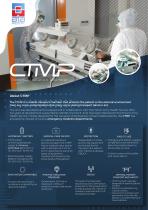
CATALOG ATA MEDICAL
30 Pages
Exhibitions
Meet this supplier at the following exhibition(s):
MEDICA 2026
16-19 Nov 2026 Düsseldorf (Germany)

Related Searches
- Healthcare facility air recirculator
- Hospital air sterilizer
- Sterile isolator
- Germicidal air recirculator
- ATA Medical air purifier with HEPA filter
- Mobile air sterilizer
- Laboratory air recirculator
- Containment isolator
- ATA Medical compact air purifier
- Air purifier with microbial elimination
- Home use air sterilizer
- Isolation chamber with HEPA filter
- Negative pressure isolation chamber
- Plasma air sterilizer
- High-performance air sanitizer
- Air sterilizer with touchscreen
- Ozone free air recirculator
- Dental clinic air sterilizer
- Activated carbon air sterilizer
- Positive pressure isolation chamber
*Prices are pre-tax. They exclude delivery charges and customs duties and do not include additional charges for installation or activation options. Prices are indicative only and may vary by country, with changes to the cost of raw materials and exchange rates.
About MedicalExpo
MedicalExpo is a marketplace that offers B2B players a complete experience, from product sourcing to purchase. MedicalExpo is an entity of VirtualExpo Group.
Are you a buyer?
Are you a supplier?
About Us
- VirtualExpo Group
- Our Partners
- Recruitment
- Testimonials