


- Medical Technical Facilities
- Intensive care
- Oxygen nasal cannula
- Fisher & Paykel Healthcare
Oxygen nasal cannula Optiflow™ Duetadult


Add to favorites
Compare this product
Characteristics
- Type
- oxygen
- Patient type
- adult
Description
Overview
Optiflow Duet is an asymmetric nasal cannula interface for nasal high flow (NHF) therapy. The design features one small prong and one large prong to create asymmetric flow patterns intended to enhance dead-space clearance and interaction between therapy flow and patient physiology.
Clinical benefits and evidence
Indications for use
Intended for nasal high flow therapy in adult patients in hospital environments (ICU, emergency department, ward). To be used with compatible NHF systems by trained clinical personnel.
Product codes and sizes
Support and documentation
Technical specifications
Optiflow Duet is an asymmetric nasal cannula interface for nasal high flow (NHF) therapy. The design features one small prong and one large prong to create asymmetric flow patterns intended to enhance dead-space clearance and interaction between therapy flow and patient physiology.
Clinical benefits and evidence
- Asymmetric prong geometry promotes directional flushing of exhaled gas and increased dead-space clearance.
- Partial/greater occlusion from the prong profile can increase airway pressure (PEEP effect) during NHF therapy.
- Documented reductions in work of breathing and minute ventilation in adult patients with acute hypoxemic respiratory failure in published experimental and clinical studies (e.g., Tatkov et al. 2023; Slobod et al. 2023).
- Designed to support improved CO2 clearance and ventilation interaction compared with symmetric interfaces.
Indications for use
Intended for nasal high flow therapy in adult patients in hospital environments (ICU, emergency department, ward). To be used with compatible NHF systems by trained clinical personnel.
Product codes and sizes
- Small — OPT962 — 20/case
- Medium — OPT964 — 20/case
- Large — OPT966 — 20/case
Support and documentation
- Specification sheet (Duet cannula spec sheet)
- Fitting guide (Duet cannula fitting guide)
- User information / Instructions for use (Duet cannula UI)
- Multimedia: explainer animation and videos illustrating asymmetric design and mechanisms of NHF therapy
Technical specifications
- Product type: asymmetric nasal cannula interface for adult nasal high flow therapy (Optiflow Duet).
- Two prong sizes per interface (one small, one large).
- Available sizes: Small (OPT962), Medium (OPT964), Large (OPT966); packaged 20 units per case.
- Intended for use with Optiflow / Airvo-compatible NHF systems (see manufacturer documentation for compatibility).
- Support materials available: spec sheet, fitting guide, user instructions and study infographics.
VIDEO
Catalogs
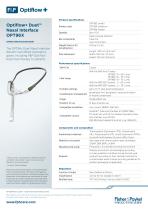
Optiflow™ Duet
1 Pages
Other Fisher & Paykel Healthcare products
Hospital:Nasal Cannula


Related Searches
- Cannula
- Artificial ventilation mask
- Silicone medical mask
- Humidifier
- Intubation cannula
- Nasal cannula
- Transparent artificial ventilation mask
- Oxygen nasal cannula
- Adjustable artificial ventilation mask
- CPAP machine
- Non-invasive artificial ventilation mask
- Adult CPAP machine
- Flexible cannula
- Respiratory humidifier
- Home care CPAP machine
- Tracheotomy cannula
- Bubble humidifier
- Pediatric nasal cannula
- Adult nasal cannula
- CPAP machine with humidifier
*Prices are pre-tax. They exclude delivery charges and customs duties and do not include additional charges for installation or activation options. Prices are indicative only and may vary by country, with changes to the cost of raw materials and exchange rates.