


- Products
- Cremation incinerator
- FOR.TEC. WASTE INCINERATORS MANUFACTURER
Cremation incinerator TITANmortuaryceramic fiberstainless steel

Add to favorites
Compare this product
Characteristics
- Function
- cremation
- Applications
- mortuary
- Sterilization chamber material
- ceramic fiber, stainless steel
- Other characteristics
- automated
- Temperature range
Min.: 900 °C
(1,652 °F)Max.: 10,000 °C
(18,032 °F)
Description
Product overview
The TITAN-model cremation furnaces for human remains are a new-generation design that maximizes the efficiency of the cremation process thanks to top-quality refractory materials and systems for recovering and recirculating heat that would otherwise be lost to the atmosphere.
Configurations and construction
Ash and zinc recovery
At the bottom of the combustion chamber are installed two ducts for ash recovery and zinc recovery. Both ducts are accessible through two hatches/doors (one at the front and one on the side) to allow easy removal of ashes and zinc and enable a quick start of a new cremation cycle.
Combustion and emissions control
Gases emitted from the cremation chamber are channeled into a post-combustion chamber which, at temperatures > 900°C, allows oxidation of gases from the primary chamber. This ensures elimination of smoke and unpleasant odors and produces emissions compliant with the most stringent national and European anti-pollution regulations. Furnaces can be equipped, if required, with continuous atmospheric emissions monitoring systems and specialized flue gas treatment systems.
Documentation
Brochure available (product brochure / technical documentation provided by the manufacturer).
Characteristics / technical specifications
The TITAN-model cremation furnaces for human remains are a new-generation design that maximizes the efficiency of the cremation process thanks to top-quality refractory materials and systems for recovering and recirculating heat that would otherwise be lost to the atmosphere.
Configurations and construction
- Available in several configurations: stacked chambers or interconnected chambers
- Exterior finishing: smooth or knurled stainless steel paneling or panel-free design
- Can be equipped with optional features for process automation according to customer needs
Ash and zinc recovery
At the bottom of the combustion chamber are installed two ducts for ash recovery and zinc recovery. Both ducts are accessible through two hatches/doors (one at the front and one on the side) to allow easy removal of ashes and zinc and enable a quick start of a new cremation cycle.
Combustion and emissions control
Gases emitted from the cremation chamber are channeled into a post-combustion chamber which, at temperatures > 900°C, allows oxidation of gases from the primary chamber. This ensures elimination of smoke and unpleasant odors and produces emissions compliant with the most stringent national and European anti-pollution regulations. Furnaces can be equipped, if required, with continuous atmospheric emissions monitoring systems and specialized flue gas treatment systems.
Documentation
Brochure available (product brochure / technical documentation provided by the manufacturer).
Characteristics / technical specifications
- Model name: TITAN
- Post-combustion chamber temperature: > 900°C
- Two recovery ducts installed at base of combustion chamber: ash recovery duct and zinc recovery duct
- Access to recovery ducts: two hatches/doors (front and side)
- Configurations: stacked chambers or interconnected chambers
- Exterior options: smooth stainless steel paneling, knurled stainless steel paneling, or panel-free design
- Optional equipment: process automation, continuous emissions monitoring, flue gas treatment systems
- Design features: refractory-lined construction and heat recovery/recirculation systems to maximize energy efficiency
Catalogs
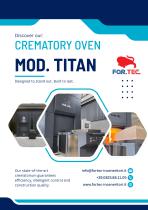
CREMATOR MOD. TITAN
4 Pages
Exhibitions
Meet this supplier at the following exhibition(s):


Global Health Exhibition 2026
26-29 Oct 2026 Malham (Saudi Arabia) Hall 5 - Stand C-60
More information
Other FOR.TEC. WASTE INCINERATORS MANUFACTURER products
CREMATORIUMS FOR CORPSES AND PET


*Prices are pre-tax. They exclude delivery charges and customs duties and do not include additional charges for installation or activation options. Prices are indicative only and may vary by country, with changes to the cost of raw materials and exchange rates.
About MedicalExpo
MedicalExpo is a marketplace that offers B2B players a complete experience, from product sourcing to purchase. MedicalExpo is an entity of VirtualExpo Group.
Are you a buyer?
Are you a supplier?