


- Products
- Catalogs
- News & Trends
- Exhibitions
Viscose wound dressing eXsorb®polyethylenenon-adherentabsorbant


Add to favorites
Compare this product
Characteristics
- Composition
- polyethylene, viscose
- Option
- non-woven, absorbant, non-adherent
- Width
50 mm, 75 mm, 100 mm
(1.97 in, 2.95 in, 3.94 in)- Length
50 mm, 75 mm, 100 mm, 150 mm, 200 mm
(1.97 in, 2.95 in, 3.94 in, 5.91 in, 7.87 in)
Description
Product Info
Description
eXsorb® is a hydrocapillary wound dressing composed of acrylic and viscose absorbent fibers with a distribution layer, enclosed in a non-woven pouch. The white side provides a low-adherent wound contact layer. On uptake of exudate the dressing forms a soft hydrophilic gel that traps bacteria and proteases, limiting the risk of infection and reducing periwound maceration.
Features
Indications
eXsorb® is indicated for heavily exuding acute and chronic wounds such as leg ulcers, pressure ulcers, donor sites and granulating wounds. It may also be used as a pressure pad to assist in control of bleeding.
Contraindications
Precautions
Follow clinical judgement and local protocols. Avoid use where contraindicated and monitor the wound and surrounding skin for signs of maceration or other adverse reactions.
How to Use
Frequency of Change
Frequency depends on wound condition. For sloughy or heavily exuding wounds, change daily. For lower exuding wounds, the dressing may remain in place for longer periods as clinically appropriate.
Sizes & Codes
eXsorb® — Sizes and packaging:
PADEX5050 — Size: 5 x 5 cm — Pieces/Case: 10 — Boxes/Case: 48
PADEX5075 — Size: 5 x 7.5 cm — Pieces/Case: 10 — Boxes/Case: 24
PADEX75100 — Size: 7.5 x 10 cm — Pieces/Case: 10 — Boxes/Case: 24
PADEX75150 — Size: 7.5 x 15 cm — Pieces/Case: 5 — Boxes/Case: 24
PADEX75200 — Size: 7.5 x 20 cm — Pieces/Case: 5 — Boxes/Case: 24
PADEX50100 — Size: 5 x 10 cm — Pieces/Case: 10 — Boxes/Case: 24
PADEX100100 — Size: 10 x 10 cm — Pieces/Case: 10 — Boxes/Case: 24
PADEX100150 — Size: 10 x 15 cm — Pieces/Case: 5 — Boxes/Case: 24
Other sizes available on request.
Downloads / Additional Info
Instruction leaflet and product brochure available from manufacturer/distributor on request.
Technical specifications
Description
eXsorb® is a hydrocapillary wound dressing composed of acrylic and viscose absorbent fibers with a distribution layer, enclosed in a non-woven pouch. The white side provides a low-adherent wound contact layer. On uptake of exudate the dressing forms a soft hydrophilic gel that traps bacteria and proteases, limiting the risk of infection and reducing periwound maceration.
Features
- Absorbs and retains up to approximately 20× its weight of blood and fluids (manufacturer data).
- Rapidly absorbs exudate and gels to lock fluids within the dressing, maintaining a moist wound surface environment while protecting surrounding skin.
- Retains absorbed exudate under compression.
- High absorbency can reduce frequency of dressing changes, minimizing disturbance of the wound bed.
- Soft, conformable pad that provides cushioning.
- Atraumatic and low-pain removal.
- PE net wound contact layer in some constructions for controlled absorption of light exudate.
Indications
eXsorb® is indicated for heavily exuding acute and chronic wounds such as leg ulcers, pressure ulcers, donor sites and granulating wounds. It may also be used as a pressure pad to assist in control of bleeding.
Contraindications
- Do not use on eyes, mucous membranes or exposed tendons (risk of dehydration).
- Do not use in cavities or sinus tracts where swelling of the dressing could occur.
- Not suitable for dry or low-exuding wounds as the dressing may adhere and cause drying or pain.
- Do not use in patients with known allergy to acrylic substances.
- Not intended as a surgical sponge or for haemostasis in heavily bleeding wounds.
- Do not use on clinically infected wounds unless under appropriate medical supervision.
Precautions
Follow clinical judgement and local protocols. Avoid use where contraindicated and monitor the wound and surrounding skin for signs of maceration or other adverse reactions.
How to Use
- 1. Cleanse the wound according to local procedures.
- 2. Apply eXsorb® with the white side facing the wound as the contact layer. Overlap the surrounding dry skin by at least 2 cm for best results.
- 3. Secure with an appropriate secondary dressing (e.g. film dressing).
Frequency of Change
Frequency depends on wound condition. For sloughy or heavily exuding wounds, change daily. For lower exuding wounds, the dressing may remain in place for longer periods as clinically appropriate.
Sizes & Codes
eXsorb® — Sizes and packaging:
PADEX5050 — Size: 5 x 5 cm — Pieces/Case: 10 — Boxes/Case: 48
PADEX5075 — Size: 5 x 7.5 cm — Pieces/Case: 10 — Boxes/Case: 24
PADEX75100 — Size: 7.5 x 10 cm — Pieces/Case: 10 — Boxes/Case: 24
PADEX75150 — Size: 7.5 x 15 cm — Pieces/Case: 5 — Boxes/Case: 24
PADEX75200 — Size: 7.5 x 20 cm — Pieces/Case: 5 — Boxes/Case: 24
PADEX50100 — Size: 5 x 10 cm — Pieces/Case: 10 — Boxes/Case: 24
PADEX100100 — Size: 10 x 10 cm — Pieces/Case: 10 — Boxes/Case: 24
PADEX100150 — Size: 10 x 15 cm — Pieces/Case: 5 — Boxes/Case: 24
Other sizes available on request.
Downloads / Additional Info
Instruction leaflet and product brochure available from manufacturer/distributor on request.
Technical specifications
- Composition: Acrylic and viscose absorbent fibers with a distribution layer, enclosed in a non-woven pouch; white low-adherent wound contact layer (PE net in some constructions).
- Absorbency: Up to approximately 20× its weight (manufacturer data).
- Mechanism: Forms a soft hydrophilic gel on absorption; traps bacteria and proteases within the gel.
- Performance under compression: Retains absorbed exudate under compression.
- Clinical use: For heavily exuding acute and chronic wounds, as a pressure pad to assist bleeding control, donor sites, leg and pressure ulcers, granulating wounds.
- Packaging: Multiple sizes and quantities as listed above.
VIDEO
Catalogs
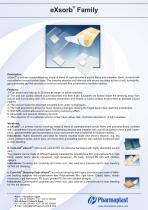
EXsorb Family
4 Pages
Exhibitions
Meet this supplier at the following exhibition(s):
MEDICA 2026
16-19 Nov 2026 Düsseldorf (Germany) Hall 6 - Stand E35
Other Pharmaplast products
Surgical Dressings


Related Searches
- Wound care
- Medical kit
- Wound dressing
- Emergency kit
- Cotton wound dressing
- Elastic wound dressing
- Sterile wound dressing
- First aid medical kit
- Sterile medical kit
- Sterile wound dressing
- Breathable wound dressing
- Disposable medical kit
- Gauze swab
- Non-woven wound dressing
- Breathable wound dressing
- Non-woven wound dressing
- Absorbant wound dressing
- Hypoallergenic wound dressing
- Medical tape
- Waterproof wound dressing
*Prices are pre-tax. They exclude delivery charges and customs duties and do not include additional charges for installation or activation options. Prices are indicative only and may vary by country, with changes to the cost of raw materials and exchange rates.
About MedicalExpo
MedicalExpo is a marketplace that offers B2B players a complete experience, from product sourcing to purchase. MedicalExpo is an entity of VirtualExpo Group.
Are you a buyer?
Are you a supplier?