


- Medical Technical Facilities
- Intensive care
- Blood flow imager
- Moor Instruments
Blood flow imager MOORLDLS-BIlaser Doppler

Add to favorites
Compare this product
Characteristics
- Applications
- blood flow
- Technology
- laser Doppler
Description
OverviewLine scanning uses a line of laser light to sweep quickly across tissue and build a blood-flow map. Typical scan area is approximately the size of an adult hand or the chest of an infant. Rapid imaging (from around 4 seconds for areas up to 15 cm × 20 cm) supports paediatric assessments and repeated scans for multiple wounds or adjacent areas of large burns.
Key features
Software (V3.0) — Summary of new features
Technical specifications
Key features
- Non-contact imaging
- Scan times from 4 seconds (area dependent)
- Scan area up to 15 cm × 20 cm (approx. adult hand or infant chest)
- Repeat-image mode for multiple scans and rapid re-imaging
- Immediate results available after scan
Software (V3.0) — Summary of new features
- DICOM features (PACS and MWL) implemented (available when DICOM option ordered)
- Redesigned user-interface windows for improved usability
- Multilingual support: English, German, French and Chinese
- New calibration software and "Calibrate" button in the Main Menu
- Added Close software + Shut down PC feature in the Main Menu
- Customisable and dockable toolbar in Scan and Review windows
- Support for new systems with a V2 USB camera
- Enhanced ROI functions for multiple ROIs of different types
- Enhanced statistical, histogram and profile analysis windows
- Note editor window for additional image information
- Export burn images to BurnCase 3D software
- New Burns colour palette display
- Improved Burn Report layout and format
- Updated Help contents and confounding factors
- Updated burn image file format to include ROI data and notes
Technical specifications
- Imaging method: Laser Doppler line scanning
- Imaging mode: Non-contact line scan
- Typical scan time: from 4 seconds (area dependent)
- Typical scan area: up to 15 cm × 20 cm (approx. adult hand or infant chest)
- Repeat-image mode for multiple scans and rapid repeat imaging
- Immediate result availability after scan
- Software: V3.0 (DICOM optional), multilingual support and enhanced analysis/export features
- Export capability: BurnCase 3D export supported
Catalogs
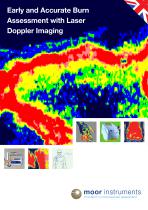
Brochure
16 Pages
Other Moor Instruments products
Imaging


*Prices are pre-tax. They exclude delivery charges and customs duties and do not include additional charges for installation or activation options. Prices are indicative only and may vary by country, with changes to the cost of raw materials and exchange rates.
About MedicalExpo
MedicalExpo is a marketplace that offers B2B players a complete experience, from product sourcing to purchase. MedicalExpo is an entity of VirtualExpo Group.
Are you a buyer?
Are you a supplier?