

- Laboratory
- Laboratory medicine
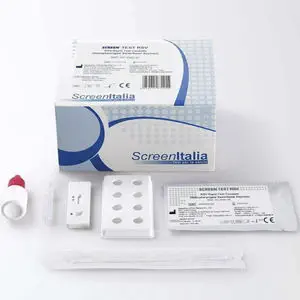
- Rapid chikungunya test
- SCREEN ITALIA


- Company
- Products
- Catalogs
- News & Trends
- Exhibitions
Rapid chikungunya test SC-0517-20IgGIgMserum

Add to favorites
Compare this product
Characteristics
- Applications
- chikungunya
- Tested parameter
- IgG, IgM
- Sample type
- serum, plasma, whole blood
Description
The Chikungunya IgG/IgM rapid test (Whole Blood/Serum/Plasma) is a rapid immunoassay for the detection of IgG and IgM antibodies to Chikungunya in human whole blood, serum or plasma. It is meant to be used as a screening test and as an aid in diagnosing CHIK infection. Chikungunya is a viral infection transmitted by the bite of an infected Aedes aegypti mosquito. It is characterized by irritation, fever, and severe joint pain (arthralgia) that usually last three to seven days. Chikungunya is a viral infection transmitted by the bite of an infected Aedes aegypti mosquito. It is characterized by irritation, fever, and severe joint pain (arthralgia) that usually last three to seven days. The name derives from a word Makonde which means “the one who bends” in reference to the bent posture that develops as a result of the painful arthritic symptoms caused by the disease. It is more frequent during the rainy seasons in tropical areas of the world, especially in Africa, Southeast Asia, South India and Pakistan. Symptoms are often clinically indistinguishable from those seen in dengue fever. In fact, cases of dual dengue and chikungunya infections have occurred in India. Unlike dengue, hemorrhagic manifestations are relatively rare and more often the disease is a self-limiting fever. Therefore it is very important to clinically distinguish dengue and CHIK infections. CHIK is diagnosed through serological analysis and viral isolation on mice or tissue cultures. An IgM immunoassay is the most practical laboratory method of analysis. The Chikungunya IgG/IgM rapid test (Whole Blood/Serum/Plasma) is a qualitative membrane test for the
Catalogs

SCREEN CATALOGUES EN
182 Pages
Other SCREEN ITALIA products
Infectious Diseases




Related Searches
- Assay kit
- Blood assay kit
- Immunoassay assay kit
- Rapid lateral flow test
- Blood rapid diagnostic test
- Cassette rapid diagnostic test
- Rapid immunologic test
- Serum rapid diagnostic test
- Plasma rapid diagnostic test
- Virus rapid diagnostic test
- Whole blood rapid diagnostic test
- Respiratory infection test kit
- Infectious disease rapid diagnostic test
- Cassette assay kit
- Lateral flow test kit
- Rapid respiratory infection test
- Urine rapid screening test
- COVID-19 detection kit
- Antigen assay kit
- Bacteria rapid diagnostic test
*Prices are pre-tax. They exclude delivery charges and customs duties and do not include additional charges for installation or activation options. Prices are indicative only and may vary by country, with changes to the cost of raw materials and exchange rates.
About MedicalExpo
MedicalExpo is a marketplace that offers B2B players a complete experience, from product sourcing to purchase. MedicalExpo is an entity of VirtualExpo Group.
Are you a buyer?
Are you a supplier?