

- Laboratory
- Laboratory medicine
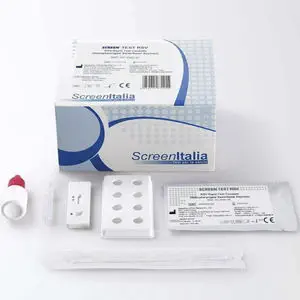
- Rapid hepatitis B test
- SCREEN ITALIA


- Company
- Products
- Catalogs
- News & Trends
- Exhibitions
Rapid hepatitis B test IHBSG-402 HBVserumplasma

Add to favorites
Compare this product
Characteristics
- Applications
- hepatitis B
- Micro-organism
- HBV
- Sample type
- serum, plasma, whole blood
- Analysis mode
- chromatographic immunoassay
Description
Rapid test for the qualitative detection of Hepatitis B surface antigen (HbsAg) in whole blood, serum or plasma. The Hepatitis B – HBsAg Cassette Rapid Test Cassette is a rapid test for the qualitative detection of the presence of HBsAg in whole blood, serum or plasma samples. The test uses a combination of monoclonal and polyclonal antibodies to selectively detect high levels of HBsAg in whole blood, serum or plasma. Viral hepatitis is a systemic disease that primarily involves the liver. Most cases of acute viral hepatitis are caused by hepatitis A virus, hepatitis B virus (HBV) or hepatitis C virus. The complex antigen found on the surface of HBV is called HbsAg. Previous designations include the Australia or Au antigen.1 The presence of HBsAg in whole blood, serum or plasma indicates both acute and chronic active hepatitis B infection. In a typical hepatitis B infection, HBsAg is detectable 2 to 4 weeks before the ALT level becomes abnormal and 3 to 5 weeks before symptoms or jaundice develop. HBsAg has four main subtypes: adw, ayw, adr, and ayr. Due to the antigenic heterogeneity of the determinant, there are 10 major serotypes of the hepatitis B virus. The HBsAg Cassette Rapid Test Cassette is a rapid test for the qualitative detection of the presence of HBsAg in whole blood, serum or plasma samples. The test uses a combination of monoclonal and polyclonal antibodies to selectively detect high levels of HBsAg in whole blood, serum or plasma. The HBsAg Rapid Cassette Test is a qualitative immunoassay using the two-site sandwich method for the detection of solid phase HBsAg in whole blood, serum or plasma.
Catalogs

SCREEN CATALOGUES EN
182 Pages
Other SCREEN ITALIA products
Infectious Diseases




Related Searches
- Assay kit
- Blood assay kit
- Immunoassay assay kit
- Rapid lateral flow test
- Blood rapid diagnostic test
- Cassette rapid diagnostic test
- Rapid immunologic test
- Serum rapid diagnostic test
- Plasma rapid diagnostic test
- Virus rapid diagnostic test
- Whole blood rapid diagnostic test
- Respiratory infection test kit
- Infectious disease rapid diagnostic test
- Cassette assay kit
- Lateral flow test kit
- Rapid respiratory infection test
- Urine rapid screening test
- COVID-19 detection kit
- Antigen assay kit
- Bacteria rapid diagnostic test
*Prices are pre-tax. They exclude delivery charges and customs duties and do not include additional charges for installation or activation options. Prices are indicative only and may vary by country, with changes to the cost of raw materials and exchange rates.
About MedicalExpo
MedicalExpo is a marketplace that offers B2B players a complete experience, from product sourcing to purchase. MedicalExpo is an entity of VirtualExpo Group.
Are you a buyer?
Are you a supplier?