

- Laboratory
- Laboratory medicine
- Rapid hepatitis C test
- SCREEN ITALIA


- Company
- Products
- Catalogs
- News & Trends
- Exhibitions
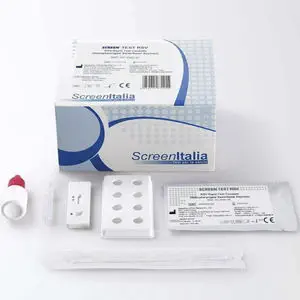
Rapid hepatitis C test IHC-402HCVserumplasma

Add to favorites
Compare this product
Characteristics
- Applications
- hepatitis C
- Micro-organism
- HCV
- Sample type
- serum, plasma, whole blood
- Analysis mode
- chromatographic immunoassay
Description
The Hepatitis C HCV rapid cassette test (whole blood/serum/plasma) is a rapid immunochromatographic test for the qualitative detection of the antibody to the hepatitis C virus in whole blood, serum or plasma. The HCV Cassette Rapid Test Cassette (Whole Blood/Serum/Plasma) is a qualitative membrane-based immunoassay for the detection of antibodies to HCV in whole blood, serum or plasma. The Hepatitis C Virus (HCV) is a single-stranded, small positive sense, encapsulated RNA virus. HCV is now known as the leading cause of parenteral transmission of non-A and non-B hepatitis. The HCV antibody is found in over 80% of patients with widely documented non-A and non-B hepatitis. Conventional methods fail to isolate the virus in cell culture or visualize it via an electron microscope. Cloning of the viral genome has made it possible to develop serological tests using recombinant antigens.1,2 Compared to the first generation of HCV EIAs that used a single recombinant antigen, multiple antigen tests using a single antigen have been added to the new serological tests. recombinant protein and / or synthetic peptides to avoid non-specific cross-reactivity and increase the sensitivity of HCV antibody tests. The HCV Cassette Rapid Test Cassette (Whole Blood/Serum/Plasma) is a rapid test for qualitatively detecting the presence of HCV antibody on whole blood, serum or plasma samples. The test uses a gold-colloidal conjugate and recombinant HCV proteins to selectively detect the HCV antibody on whole blood, serum or plasma. The recombinant HCV proteins used in the test kit are genetically encoded for both structural (nucleocapsid) and non-structural proteins.
Catalogs

SCREEN CATALOGUES EN
182 Pages
Other SCREEN ITALIA products
Infectious Diseases




Related Searches
- Assay kit
- Blood assay kit
- Immunoassay assay kit
- Rapid lateral flow test
- Blood rapid diagnostic test
- Cassette rapid diagnostic test
- Rapid immunologic test
- Serum rapid diagnostic test
- Plasma rapid diagnostic test
- Virus rapid diagnostic test
- Whole blood rapid diagnostic test
- Respiratory infection test kit
- Infectious disease rapid diagnostic test
- Cassette assay kit
- Lateral flow test kit
- Rapid respiratory infection test
- Urine rapid screening test
- COVID-19 detection kit
- Antigen assay kit
- Bacteria rapid diagnostic test
*Prices are pre-tax. They exclude delivery charges and customs duties and do not include additional charges for installation or activation options. Prices are indicative only and may vary by country, with changes to the cost of raw materials and exchange rates.
About MedicalExpo
MedicalExpo is a marketplace that offers B2B players a complete experience, from product sourcing to purchase. MedicalExpo is an entity of VirtualExpo Group.
Are you a buyer?
Are you a supplier?