

- Laboratory
- Laboratory medicine
- Rapid tuberculosis test
- SCREEN ITALIA


- Company
- Products
- Catalogs
- News & Trends
- Exhibitions
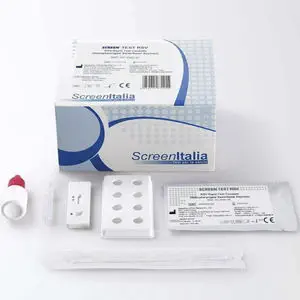
Rapid tuberculosis test SC-0739-40for quality controlimmunoglobulin AIgG

Add to favorites
Compare this product
Characteristics
- Applications
- tuberculosis
- Application field
- for quality control
- Tested parameter
- immunoglobulin A, IgG, IgM
- Sample type
- serum, plasma, whole blood
- Analysis mode
- chromatographic immunoassay
- Format
- cassette
Description
Rapid test for the qualitative detection of anti-TB antibodies (IgG, IgM and IgA isotypes) in whole blood, serum or plasma samples. The Rapid Tuberculosis Test (Whole Blood/Serum/Plasma) is a qualitative, solid phase, direct, two-site immunoassay for the detection of anti-TB antibodies in whole blood, serum or plasma samples. The membrane is pre-coated with recombinant TB antigen on the line in the test region of the media. During the test, anti-TB antibodies, if present in the whole blood, serum or plasma sample, react with the particles coated with recombinant TB antigen. The compound migrates upwards on the membrane chromatographically by capillary action reacting with the recombinant TB antigen on the membrane and generates a colored line. The presence of this colored line in the test area indicates a positive result, while its absence indicates a negative result. As a procedural control, a line will always appear in the test control zone, indicating that the correct volume of specimen has been used and that the membrane has been soaked. Tuberculosis (TB) is mainly spread by airborne transmission of aerosolized droplets emitted by coughing, sneezing and talking. Poorly ventilated areas present the greatest risk of exposure to infection. TB is the leading cause of morbidity and mortality worldwide, causing the largest number of deaths from a single infectious agent. The World Health Organization reports the diagnosis of over 8 million new cases of active tuberculosis every year. About 3 million deaths per year are also attributed to TB1,2. Timely diagnosis is crucial for TB control, as it allows for a rapid start of therapy and limits further spread of the infection.
Catalogs

SCREEN CATALOGUES EN
182 Pages
Other SCREEN ITALIA products
Infectious Diseases




Related Searches
- Assay kit
- Blood assay kit
- Immunoassay assay kit
- Rapid lateral flow test
- Blood rapid diagnostic test
- Cassette rapid diagnostic test
- Rapid immunologic test
- Serum rapid diagnostic test
- Plasma rapid diagnostic test
- Virus rapid diagnostic test
- Whole blood rapid diagnostic test
- Respiratory infection test kit
- Infectious disease rapid diagnostic test
- Cassette assay kit
- Lateral flow test kit
- Rapid respiratory infection test
- Urine rapid screening test
- COVID-19 detection kit
- Antigen assay kit
- Bacteria rapid diagnostic test
*Prices are pre-tax. They exclude delivery charges and customs duties and do not include additional charges for installation or activation options. Prices are indicative only and may vary by country, with changes to the cost of raw materials and exchange rates.
About MedicalExpo
MedicalExpo is a marketplace that offers B2B players a complete experience, from product sourcing to purchase. MedicalExpo is an entity of VirtualExpo Group.
Are you a buyer?
Are you a supplier?