

- Laboratory
- Laboratory medicine
- Rapid diarrhea test
- SCREEN ITALIA


- Company
- Products
- Catalogs
- News & Trends
- Exhibitions
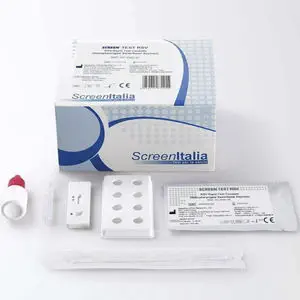
Rapid diarrhea test SC-0524-10Cryptosporidiumfeceschromatographic immunoassay

Add to favorites
Compare this product
Characteristics
- Applications
- for diarrhea
- Micro-organism
- Cryptosporidium
- Sample type
- feces
- Analysis mode
- chromatographic immunoassay
Description
The Cryptosporidium Rapid Cassette Test (faeces) is a rapid chromatographic immunoassay for the qualitative detection of Cryptosporidium antigens in human faeces. Cryptosporidiosis is a diarrheal disease caused by microscopic parasites of the genus Cryptosporidium. Once an animal or a person is infected with it, the parasite lives in the intestine and passes in the feces. The parasite is protected by an external shell that allows it to survive outside the body for long periods of time and which makes it very resistant to chlorine-based disinfectants. Both the disease and the parasite are commonly known as “Crypto”. The disease can be contracted through the ingestion of contaminated water or with the cough of an infected individual. It can spread via the fecal-oral route like other gastrointestinal pathogens. Cryptosporidiosis is a diarrheal disease caused by microscopic parasites of the genus Cryptosporidium. Once an animal or person is infected with it, the parasite lives in the intestines and passes in the feces. The parasite is protected by an outer shell that allows it to survive outside the body for long periods of time and which makes it very resistant to chlorine-based disinfectants. Both the disease and the parasite are commonly known as “Crypto”. The disease can be contracted through the ingestion of contaminated water or from the cough of an infected individual. It can spread via the fecal oral route like other gastrointestinal pathogens. The Cryptosporidium Antigen Rapid Cassette Test is a qualitative lateral flow immunoassay for the detection of Cryptosporidium antigens in human faeces.
Catalogs

SCREEN CATALOGUES EN
182 Pages
Other SCREEN ITALIA products
Infectious Diseases




Related Searches
- Assay kit
- Blood assay kit
- Immunoassay assay kit
- Rapid lateral flow test
- Blood rapid diagnostic test
- Rapid immunologic test
- Cassette rapid diagnostic test
- Serum rapid diagnostic test
- Plasma rapid diagnostic test
- Virus rapid diagnostic test
- Whole blood rapid diagnostic test
- Respiratory infection test kit
- Infectious disease rapid diagnostic test
- Cassette assay kit
- Lateral flow test kit
- Rapid respiratory infection test
- Urine rapid screening test
- COVID-19 detection kit
- Antigen assay kit
- Test strip
*Prices are pre-tax. They exclude delivery charges and customs duties and do not include additional charges for installation or activation options. Prices are indicative only and may vary by country, with changes to the cost of raw materials and exchange rates.