

- Laboratory
- Laboratory medicine
- Veterinary rapid test
- Hangzhou Antigenne Technology Co. Ltd

- Company
- Products
- Catalogs
- News & Trends
- Exhibitions
Pancreatic islet function. rapid test Sabervet CPLveterinaryfor canineslipase


Add to favorites
Compare this product
Characteristics
- Applications
- pancreatic islet function.
- Application field
- veterinary
- Patient type
- for canines
- Tested parameter
- lipase
- Sample type
- serum, plasma
- Analysis mode
- lateral flow
- Format
- cassette
- Specificity
98.8 %
- Sensitivity
99 %
Description
Sabervet Canine Pancreatic Lipase Rapid Test
The SaberVet Canine Pancreatic Lipase Rapid Test is a lateral flow immunoassay intended for the determination of pancreas-specific lipase levels in canine serum or plasma.
Production in China at a CE, ISO 13485 & GMP certified factory.
Results in 10 Minutes
Room Temperature(2-30C) Storage
Description
The pancreas of the canine is V-shaped, with both left and right lobes narrow and long, the two lobes being connected at an acute angle posterior to the pylorus, the junction being the body of the pancreas. The left lobe extends posteriorly to the left between the visceral surface of the stomach and the transverse colon, reaching the anterior end of the left kidney; the right lobe extends posteriorly on the dorsal side of the descending part of the duodenum, on the caudal lobe of the liver, and on the posterior end of the right kidney, often terminating a short distance posterior to the right kidney. Most natural cases are edematous pancreatitis, while experimental cases are acute hemorrhagic pancreatitis. The cause may be related to the following factors,the experimental onset is acute haemorrhagic pancreatitis,The etiology may be related to the following factors
1. Obesity Acute pancreatitis occurs in obese dogs, and the condition of experimental obese dogs is more serious than that of thin dogs. Excess fat in the food is prone to “nutritional deficiency”, while high-fat food can also change the content of pancreatic intracellular enzymes. Therefore, high-fat food and nutritional status become an important factor in triggering acute pancreatitis.
2. Hyperlipidaemia Hyperlipidaemia is often associated with acute pancreatitis in dogs. Conversely, acute pancreatitis can induce hyperlipidaemia and alter plasma proteases.
3. Bile Duct Diseases Since the bile ducts and the lymphatic vessels in the interstitium of the pancreas communicate with each other, bile duct diseases can spread to the pancreas through the lymphatic vessels and develop.
4. Infectious diseases When certain infectious diseases occur in dogs and cats, pancreatitis becomes one of the necessary diseases, such as feline toxoplasmosis and feline infectious peritonitis, which can damage the liver and induce pancreatitis. Therefore, liver disease or pancreatitis in cats may be a sign of toxoplasmosis or feline infectious peritonitis.
5. Duodenal fluid reflux Reflux of duodenal fluid or bile into the pancreatic ducts and pancreatic interstitium may be a cause of acute pancreatitis when it occurs for some reason. Bile contains haemolysed lecithin and unconjugated bile salts, which are toxic to the pancreas.
6. Drugs Many drugs can induce the disease. Commonly used drugs in veterinary medicine include thiazide diuretics, thiazopurine, mentholase and tetracycline. Cholinesterase inhibitors and cholinergic downregulators can also induce pancreatitis.
7. Other factors Pancreatic trauma, automobile accidents, fall from height and surgical procedures lead to pancreatic trauma and induce pancreatitis.
Testing Methods Blood tests in acute pancreatitis show an increase in the total number of leukocytes, an increase in the proportion of neutrophils, an increase in serum amylase and lipase activity, and an increase in blood urea nitrogen. Urine contains protein and tubular patterns. Severe pancreatitis may spread to surrounding organs and form ascites, which contains amylase. Determination of amylase in ascites is diagnostic of pancreatitis. Abdominal ultrasonography is more specific compared to abdominal radiology. However, an enlarged pancreas alone does not confirm the diagnosis of pancreatitis, as pancreatic oedema can also be seen in portal hypertension or hypoalbuminaemia. In a study of 70 dogs with severe pancreatitis, the sensitivity of abdominal ultrasound was 68 per cent. ITGEN has developed a rapid test card that can detect in a short time whether the level of pancreatic lipase in dogs is healthy.
The SaberVet Canine Pancreatic Lipase Rapid Test is a lateral flow immunoassay intended for the determination of pancreas-specific lipase levels in canine serum or plasma.
Production in China at a CE, ISO 13485 & GMP certified factory.
Results in 10 Minutes
Room Temperature(2-30C) Storage
Description
The pancreas of the canine is V-shaped, with both left and right lobes narrow and long, the two lobes being connected at an acute angle posterior to the pylorus, the junction being the body of the pancreas. The left lobe extends posteriorly to the left between the visceral surface of the stomach and the transverse colon, reaching the anterior end of the left kidney; the right lobe extends posteriorly on the dorsal side of the descending part of the duodenum, on the caudal lobe of the liver, and on the posterior end of the right kidney, often terminating a short distance posterior to the right kidney. Most natural cases are edematous pancreatitis, while experimental cases are acute hemorrhagic pancreatitis. The cause may be related to the following factors,the experimental onset is acute haemorrhagic pancreatitis,The etiology may be related to the following factors
1. Obesity Acute pancreatitis occurs in obese dogs, and the condition of experimental obese dogs is more serious than that of thin dogs. Excess fat in the food is prone to “nutritional deficiency”, while high-fat food can also change the content of pancreatic intracellular enzymes. Therefore, high-fat food and nutritional status become an important factor in triggering acute pancreatitis.
2. Hyperlipidaemia Hyperlipidaemia is often associated with acute pancreatitis in dogs. Conversely, acute pancreatitis can induce hyperlipidaemia and alter plasma proteases.
3. Bile Duct Diseases Since the bile ducts and the lymphatic vessels in the interstitium of the pancreas communicate with each other, bile duct diseases can spread to the pancreas through the lymphatic vessels and develop.
4. Infectious diseases When certain infectious diseases occur in dogs and cats, pancreatitis becomes one of the necessary diseases, such as feline toxoplasmosis and feline infectious peritonitis, which can damage the liver and induce pancreatitis. Therefore, liver disease or pancreatitis in cats may be a sign of toxoplasmosis or feline infectious peritonitis.
5. Duodenal fluid reflux Reflux of duodenal fluid or bile into the pancreatic ducts and pancreatic interstitium may be a cause of acute pancreatitis when it occurs for some reason. Bile contains haemolysed lecithin and unconjugated bile salts, which are toxic to the pancreas.
6. Drugs Many drugs can induce the disease. Commonly used drugs in veterinary medicine include thiazide diuretics, thiazopurine, mentholase and tetracycline. Cholinesterase inhibitors and cholinergic downregulators can also induce pancreatitis.
7. Other factors Pancreatic trauma, automobile accidents, fall from height and surgical procedures lead to pancreatic trauma and induce pancreatitis.
Testing Methods Blood tests in acute pancreatitis show an increase in the total number of leukocytes, an increase in the proportion of neutrophils, an increase in serum amylase and lipase activity, and an increase in blood urea nitrogen. Urine contains protein and tubular patterns. Severe pancreatitis may spread to surrounding organs and form ascites, which contains amylase. Determination of amylase in ascites is diagnostic of pancreatitis. Abdominal ultrasonography is more specific compared to abdominal radiology. However, an enlarged pancreas alone does not confirm the diagnosis of pancreatitis, as pancreatic oedema can also be seen in portal hypertension or hypoalbuminaemia. In a study of 70 dogs with severe pancreatitis, the sensitivity of abdominal ultrasound was 68 per cent. ITGEN has developed a rapid test card that can detect in a short time whether the level of pancreatic lipase in dogs is healthy.
VIDEO
Catalogs
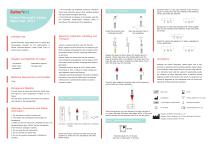
Other Hangzhou Antigenne Technology Co. Ltd products
Canine Rapid Test


Related Searches
- Assay kit
- Blood assay kit
- Serum assay kit
- Immunoassay assay kit
- Rapid lateral flow test
- Plasma assay kit
- Blood rapid diagnostic test
- Cassette rapid diagnostic test
- Rapid immunologic test
- Serum rapid diagnostic test
- Plasma rapid diagnostic test
- Virus rapid diagnostic test
- Whole blood rapid diagnostic test
- Infectious disease rapid diagnostic test
- Optical assay kit
- Cassette assay kit
- Rapid respiratory infection test
- Urine rapid screening test
- Bacteria rapid diagnostic test
- Strip rapid diagnostic test
*Prices are pre-tax. They exclude delivery charges and customs duties and do not include additional charges for installation or activation options. Prices are indicative only and may vary by country, with changes to the cost of raw materials and exchange rates.
About MedicalExpo
MedicalExpo is a marketplace that offers B2B players a complete experience, from product sourcing to purchase. MedicalExpo is an entity of VirtualExpo Group.
Are you a buyer?
Are you a supplier?